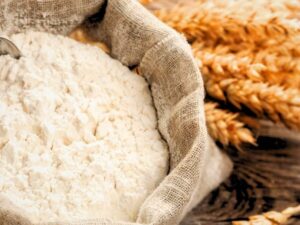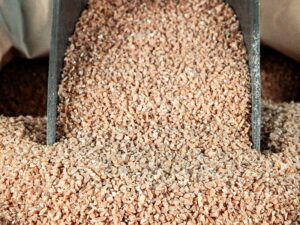

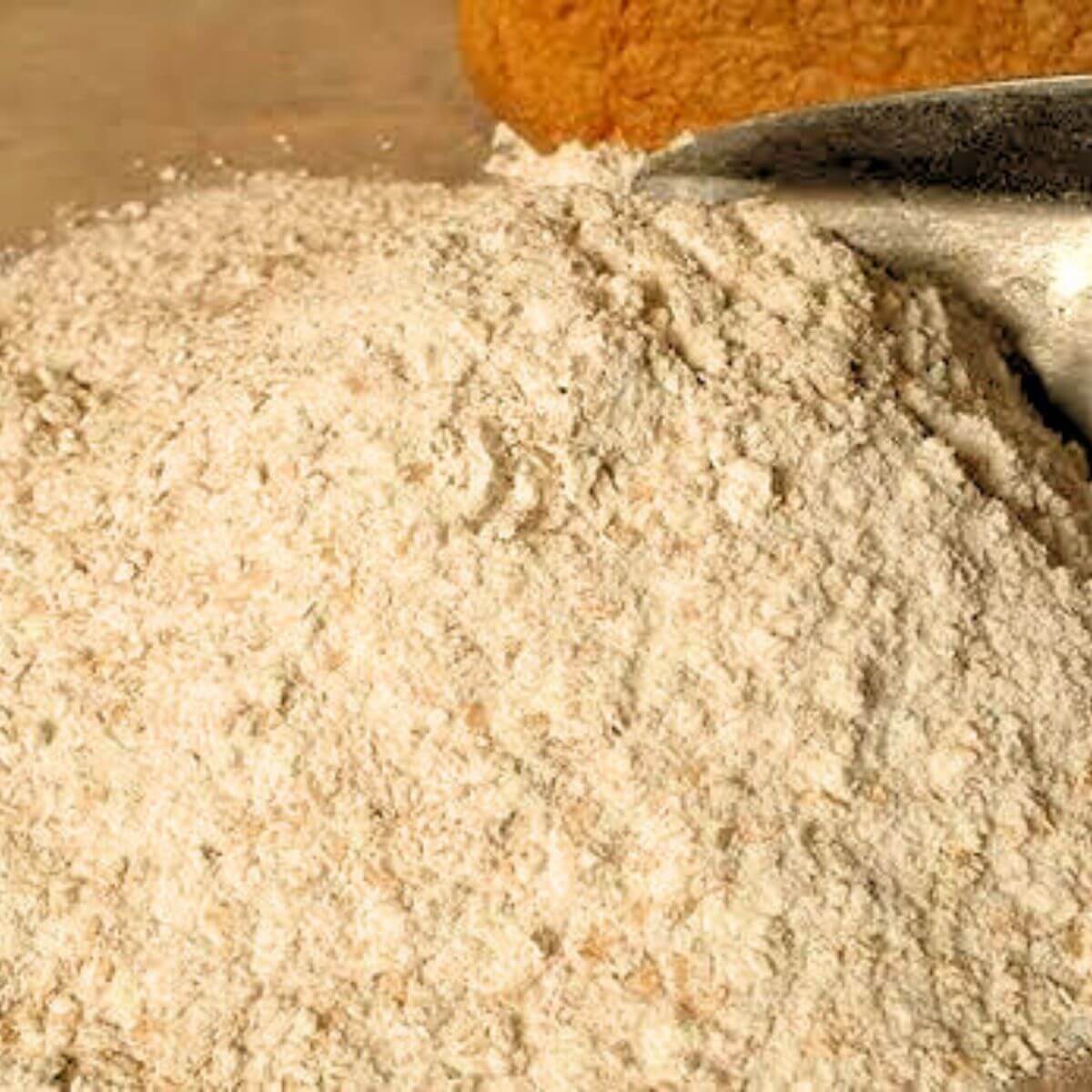
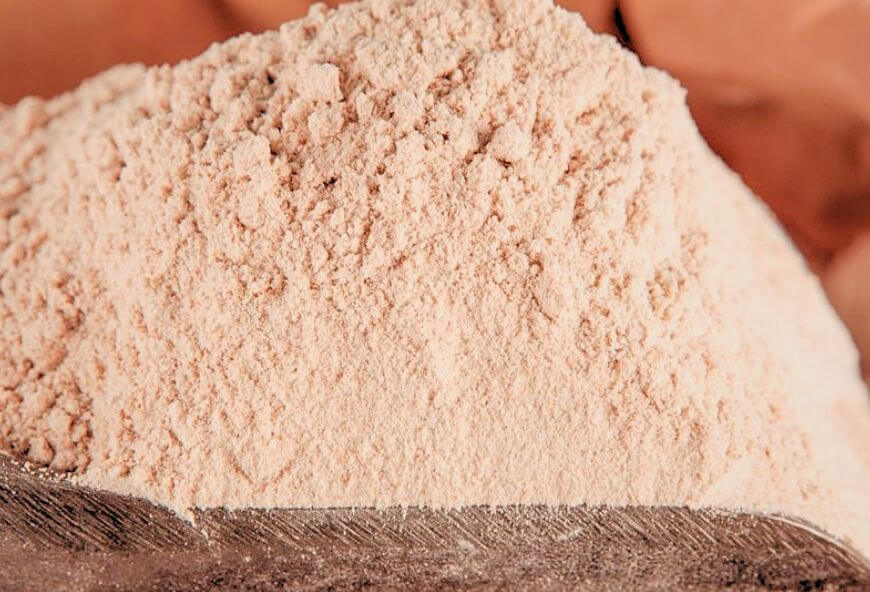
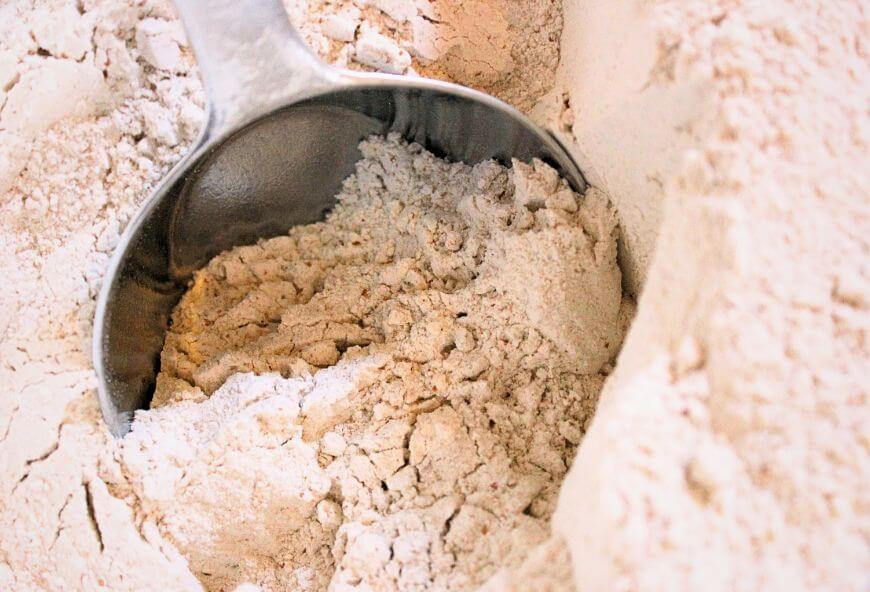
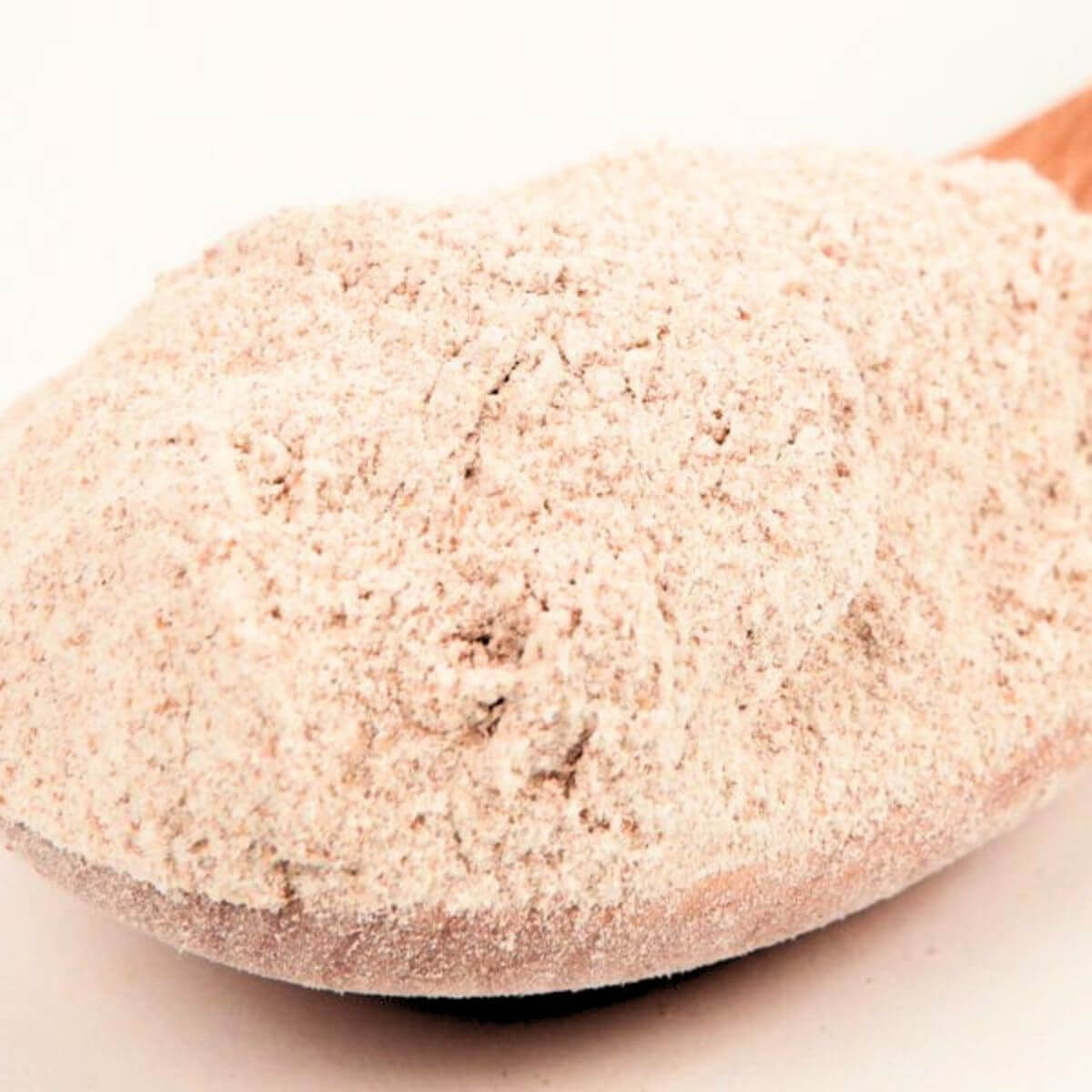

Whole wheat flour (atta) from Brazil for industrial bakeries, flatbread manufacturers, pasta producers, and health food processors. 100% whole grain flour retaining bran, germ, and endosperm. Protein 12-14% (dry basis), ash 1.4-1.8%, moisture 14% max. Stone-ground or roller-milled processing. 25kg/50kg PP woven bags with PE liner. FOB/CFR/CIF from Santos and Paranaguá ports. MOQ 20 MT per shipment. Competitive pricing for bulk bakery flour buyers in Africa, Middle East, and Asia.
| Parameter | Specification |
|---|---|
| Protein | 12–14% (dry basis) |
| Ash | 1.4–1.8% |
| Moisture | 14% max |
| Wet Gluten | 26–32% |
| MOQ | 20 MT |
| Terms | FOB / CFR / CIF |
| Origin | Brazil |
| Type | 100% Whole Grain |
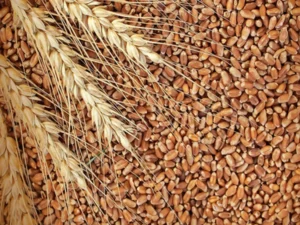
SAI AGRO BRAZIL supplies whole wheat flour (atta) from Brazilian wheat mills to industrial bakeries, flatbread manufacturers, pasta producers, and health food companies worldwide. Whole wheat flour is produced by grinding the entire wheat kernel bran, germ, and endosperm creating a 100% whole grain flour with 12-14% protein, 1.4-1.8% ash, and the characteristic nutty flavor and fiber content that define whole wheat products. Brazil’s wheat milling industry has invested significantly in modern milling technology, producing whole wheat flour that meets international specifications for bread, flatbreads (chapati/roti), whole wheat pasta, cookies, and high-fiber bakery products. Our export whole wheat flour serves the growing global demand for whole grain products driven by health-conscious consumers and food manufacturers seeking clean-label ingredients.
SAI AGRO BRAZIL supplies 100% whole grain wheat flour (atta/wholemeal flour) from Brazilian milling facilities to food manufacturers and bakeries worldwide. Unlike refined white flour that removes bran and germ during milling, whole wheat flour incorporates the entire wheat kernel. This preserves the natural fiber (bran), essential fatty acids and B-vitamins (germ), and protein-rich endosperm in their natural proportions, resulting in flour with higher protein (12-14%), higher ash (1.4-1.8%), and 3-4x the dietary fiber of white flour.
Brazil’s wheat milling industry operates approximately 150 mills nationwide (ABITRIGO — Brazilian Wheat Industry Association), with total milling capacity exceeding 15 million metric tons annually. Mills in Paraná, São Paulo, and Rio Grande do Sul states produce whole wheat flour for both domestic consumption and export. Brazilian whole wheat flour is produced from non-GMO wheat varieties (no GM wheat is commercially approved anywhere globally), meeting clean-label requirements for health-conscious markets.
Two primary processing methods are available. Stone-ground milling uses traditional granite millstones that grind the entire wheat kernel in a single pass at low temperatures, preserving germ oil integrity and producing flour with a coarser, more variable granulation preferred for artisan breads and traditional flatbreads (chapati/roti). Roller milling uses a series of corrugated and smooth steel rollers to gradually reduce the wheat kernel, then recombines bran, germ, and endosperm streams for more uniform granulation, ideal for industrial bakeries requiring consistent dough handling properties in automated production lines. Both methods deliver 100% whole grain flour — the choice depends on buyer preference for granulation and dough performance characteristics.
Brazil offers three key advantages for whole wheat flour buyers. First, competitive pricing relative to European and North American origins due to lower milling costs and favorable wheat input pricing from Mercosur trade bloc partners (Argentina, Uruguay). Second, non-GMO guarantee — since no GMO wheat exists commercially, all Brazilian wheat flour is inherently non-GMO, an important claim for clean-label and organic-positioned brands. Third, strategic location on Atlantic shipping routes serving markets in Africa, Middle East, and Europe with transit times of 15-30 days from Paranaguá and Santos ports. Brazil’s expanding wheat production (9.5 million MT in 2025/26) and milling capacity ensure stable export supply throughout the year.
| Parameter | Specification | Test Method |
|---|---|---|
| Type | Whole Wheat Flour (Atta), 100% Whole Grain | Visual/microscopic |
| Protein (N×5.7, dry basis) | 12-14% | Kjeldahl (AACC 46-12) |
| Ash Content | 1.4-1.8% (dry basis) | AACC 08-01 (550°C) |
| Moisture | 14.0% maximum | AACC 44-15A |
| Wet Gluten | 26-32% | AACC 38-12A |
| Falling Number | 250-350 seconds | AACC 56-81B (Hagberg) |
| Crude Fiber | 1.8-2.5% | AACC 32-10 |
| Granulation | Fine to medium (per buyer spec) | Sieve analysis |
| Water Absorption (Farinograph) | 62-68% | AACC 54-21 |
| Shelf Life | 6-9 months from production date | Storage at <25°C, <65% RH |
| Packaging | 25kg/50kg PP woven bags with PE liner | N/A |
| MOQ | 20 Metric Tons | N/A |
| Shipment Terms | FOB, CFR, CIF (Incoterms 2020) | N/A |
Test methods follow AACC International standards. Shelf life can be extended through modified atmosphere packaging or cold chain shipping for buyers in tropical climates. Mycotoxin screening (DON, aflatoxin) and microbiological testing (TPC, coliforms, yeast/mold, Salmonella, E. coli) available upon request.
Standard documentation: Certificate of Analysis (full specification test results), Phytosanitary Certificate (MAPA), Certificate of Origin (Brazilian Chamber of Commerce), Quality/Weight Certificate (SGS/Bureau Veritas). Optional certifications: Halal certification for Middle East and Southeast Asian markets, Organic certification (for buyers requiring certified organic whole wheat flour), non-GMO statement, EU MRL pesticide compliance certificate, and gluten content statement (whole wheat flour naturally contains gluten — not suitable for celiac/gluten-free applications).
Brazilian whole wheat flour supports six primary food manufacturing applications. Flatbreads (Chapati/Roti): the primary use in South Asian and East African markets, where atta flour with 12-14% protein and fine-to-medium granulation produces soft, pliable flatbreads with characteristic whole wheat flavor. Whole wheat bread: industrial bakeries producing pan bread, artisan loaves, and sandwich bread with 30-100% whole wheat content, using Brazilian flour’s strong gluten (26-32% wet gluten) for good loaf volume. Whole wheat pasta: dried pasta manufacturers producing whole grain spaghetti, penne, and fusilli where the higher ash content contributes to authentic whole wheat color and flavor.
Cookies and crackers: whole wheat digestive biscuits, crackers, and cookies benefiting from the flour’s nutty flavor profile and fiber content for clean-label positioning. Breakfast cereals: extruded whole wheat cereals and granola clusters using whole wheat flour as the base ingredient. Health food products: protein bars, meal replacement shakes, and dietary supplements incorporating whole wheat flour for fiber enrichment and clean-label whole grain claims. The 100% whole grain composition qualifies products for whole grain labeling in markets with whole grain content regulations (US FDA, EU, UK).
Key buyer segments: (1) Industrial bakeries in Africa (Nigeria, South Africa, Kenya) and the Middle East producing packaged whole wheat bread and flatbreads at scale; (2) Flatbread manufacturers in South Asia, East Africa, and the Gulf region requiring consistent atta flour for chapati/roti production; (3) Pasta manufacturers in Latin America and Africa producing whole wheat pasta lines; (4) Health food companies in Europe and North America formulating high-fiber, whole grain positioned products; (5) Institutional and government buyers procuring fortified whole wheat flour for school feeding and food aid programs — with fortification available upon request (iron, folic acid, B-vitamins per WHO recommendations).
Whole wheat flour ships in dry containers with moisture protection. Standard load: 20 MT per 20-foot container (800 × 25kg bags or 400 × 50kg bags). PP woven bags with inner PE liner provide moisture barrier protection during ocean transit. For large-volume buyers (100+ MT monthly), 40-foot containers (25-27 MT) reduce per-ton freight costs. Bulk flour handling (bulk tanker containers) may be available for contract volumes exceeding 500 MT monthly, subject to feasibility assessment at destination port discharge facilities.
Loading ports: Santos (São Paulo) and Paranaguá (Paraná) offer regular container vessel services with 5-15 sailings weekly to major trade routes. Container dwell time at port: 3-5 days for dry cargo. Transit times: Europe 16-22 days, Middle East 22-30 days, West Africa 16-22 days, East Africa 22-28 days, South/Southeast Asia 28-38 days. Shelf life management is critical: we recommend shipping within 30 days of production and arrival at destination within 60 days for optimal quality. Cold chain shipping available for destinations with extreme heat during transit.
Standard Incoterms 2020: FOB, CFR, CIF from Brazilian ports. Payment: Letter of Credit (L/C) at sight for new accounts; open account (T/T 30-60 days) for established buyers with credit history. Currency: USD per metric ton. Pricing basis: Brazilian domestic wheat flour price plus export premium, quoted per metric ton FOB/CFR/CIF. Annual supply contracts available with quarterly pricing reviews and scheduled shipments. Forward pricing available for contracts locked 3-6 months ahead.
Whole wheat flour (atta/wholemeal flour) is produced by grinding the entire wheat kernel — bran, germ, and endosperm — retaining 100% whole grain content. White flour removes bran and germ during milling. This gives whole wheat flour higher protein (12-14% vs 10-12%), higher ash (1.4-1.8% vs 0.5-0.7%), 3-4x more dietary fiber, richer nutty flavor, and shorter shelf life (6-9 months vs 12+ months) due to germ oil content. Whole wheat flour is the required flour for traditional flatbreads (chapati/roti), whole wheat bread, and whole grain pasta. Brazilian whole wheat flour meets atta specifications for South Asian and African flatbread markets.
MOQ is 20 metric tons (one 20-foot container load). Bag size options: 25kg or 50kg PP woven bags with inner PE liner. Volume pricing tiers: 20-100 MT (standard), 100-500 MT (volume discount), 500+ MT monthly (contract pricing). Annual supply contracts with scheduled monthly or quarterly shipments available for food manufacturers with consistent demand.
Yes. All Brazilian wheat flour is inherently non-GMO because no genetically modified wheat varieties are approved for commercial cultivation anywhere in the world. This makes Brazilian whole wheat flour suitable for markets with GMO labeling regulations (EU, Japan, South Korea, Brazil itself) and for brands positioning products as non-GMO. We provide a non-GMO statement with all shipments. Note: whole wheat flour contains gluten and is not suitable for celiac or gluten-intolerant consumers.
Shelf life is 6-9 months from production date when stored at <25°C and <65% relative humidity. The bran and germ components contain natural oils that can oxidize over time, causing rancidity — this is the shelf-life limiting factor compared to white flour. Proper storage in cool, dry conditions is essential. For buyers in tropical climates, we recommend ordering quantities consumable within 3-4 months of arrival and considering cold chain or climate-controlled container shipping. Shelf life can be extended through modified atmosphere packaging (nitrogen flush) or vacuum packing upon request for premium products.
Yes, fortification with micronutrients is available for contract volumes. Common fortification premixes include iron (ferrous fumarate or NaFeEDTA), folic acid, zinc, and B-vitamins (thiamine, riboflavin, niacin) per WHO/FAO recommendations for wheat flour fortification. Fortification specifications should be agreed during contract negotiation. This service is particularly relevant for government procurement, food aid programs, and markets with mandatory flour fortification regulations. Minimum order quantities for fortified flour may be higher than standard product.
Brazilian whole wheat flour with 12-14% protein and fine-to-medium granulation performs comparably to Indian atta for chapati/roti production. Key differences: Indian atta is typically stone-ground from hard durum wheat (higher protein), while Brazilian whole wheat flour can be stone-ground or roller-milled from common wheat varieties (Triticum aestivum). Water absorption: 62-68% for Brazilian vs 65-75% for Indian atta. Dough extensibility: Brazilian flour produces slightly more extensible dough, which some flatbread manufacturers prefer for mechanized chapati lines. We recommend sample evaluation to confirm suitability for your specific flatbread production process. Custom granulation specifications available for contract volumes.
Contact SAI AGRO BRAZIL for competitive pricing on bulk whole wheat flour (atta) for your bakery, flatbread, or food manufacturing operation.
SAI AGRO BRAZIL
Share your volume, destination and trade preference. Our commercial desk will review your requirement and reply within 24-48 hours
Adding {{itemName}} to cart
Added {{itemName}} to cart