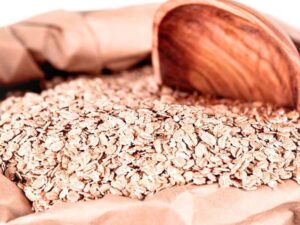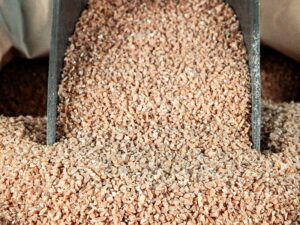

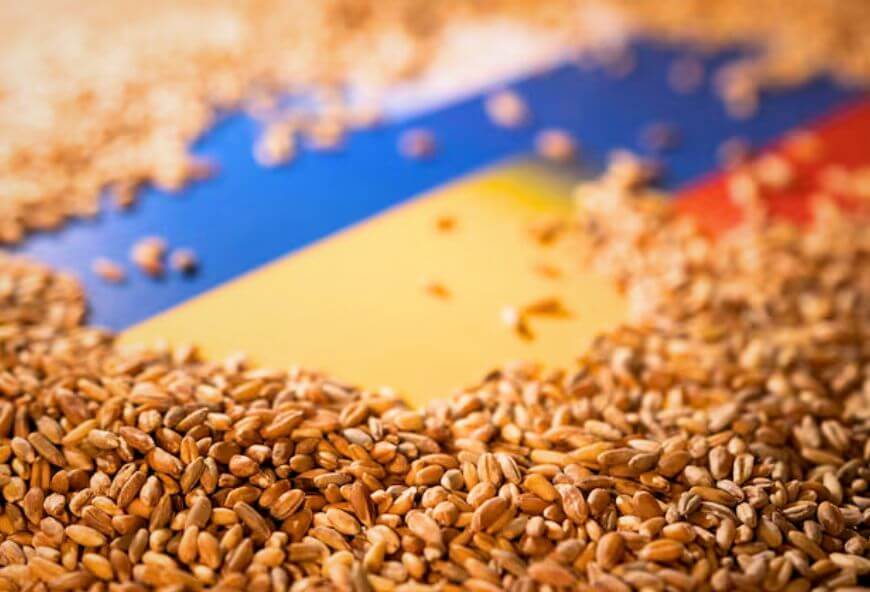
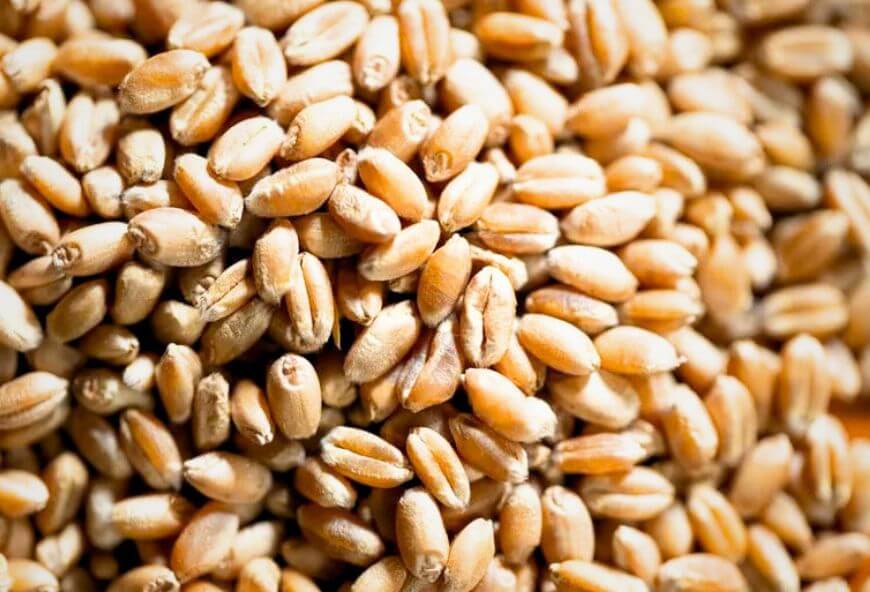
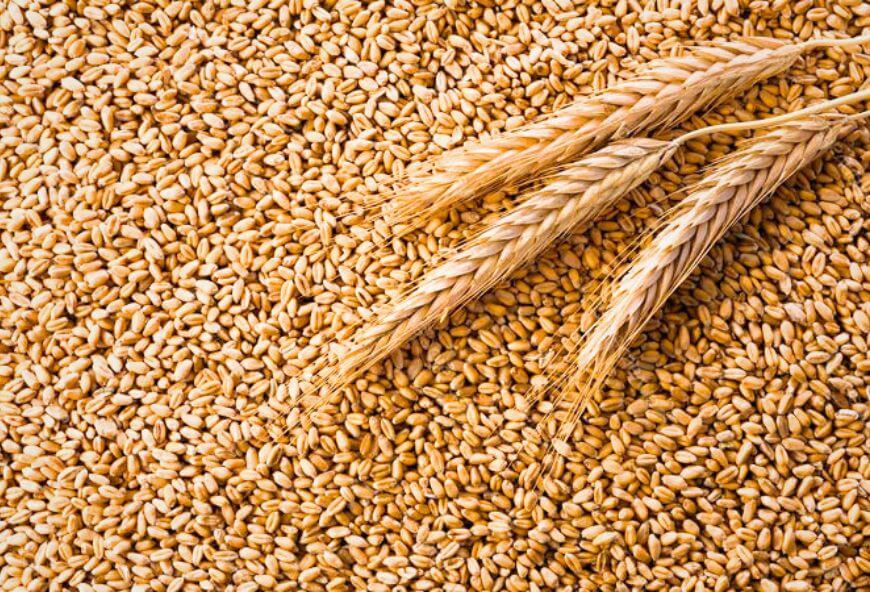
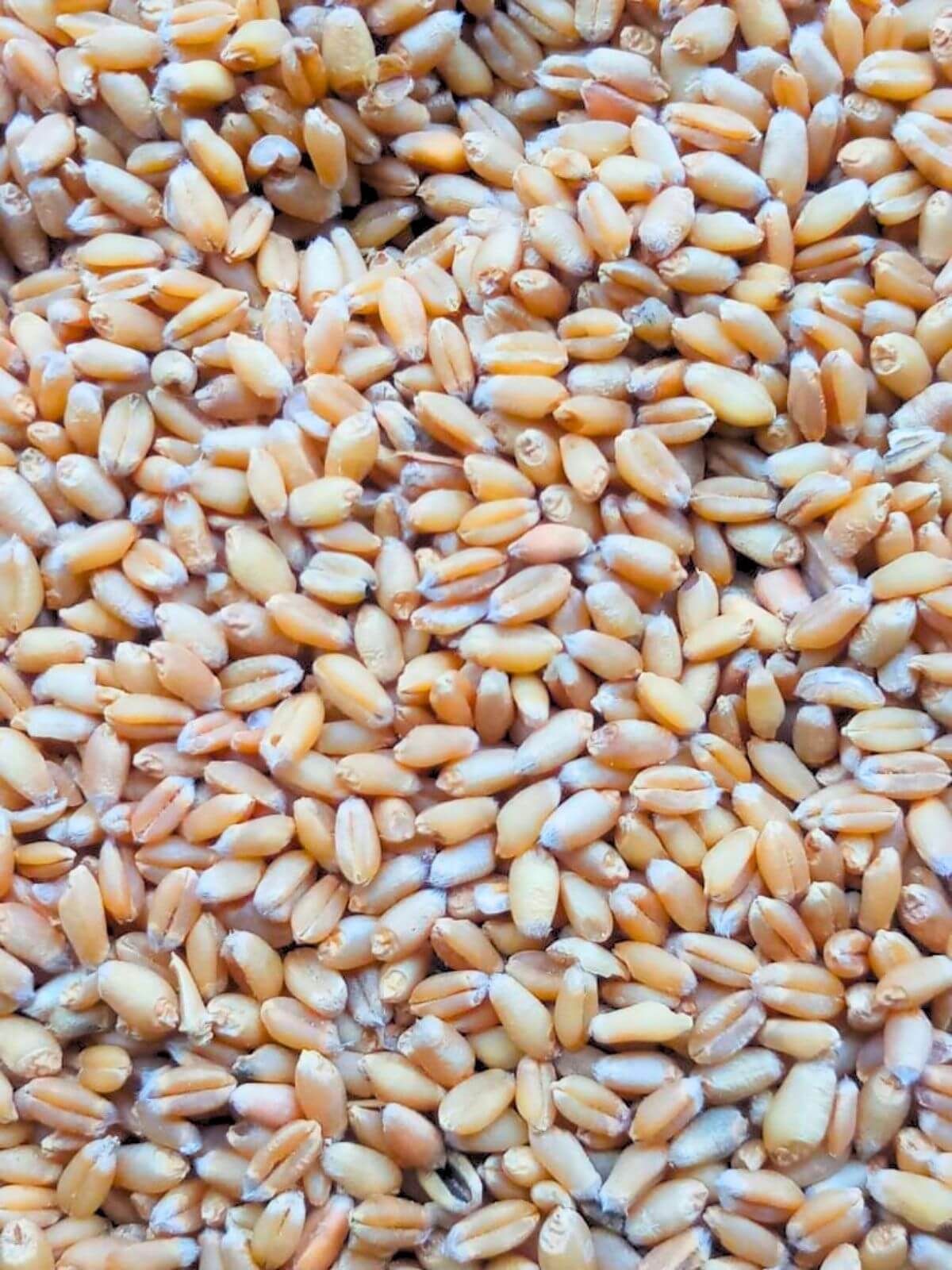
Certified beardless wheat seed for agricultural planting. Late maturity, Hessian Fly resistant. Germination 85% min, purity 98% min, moisture 13% max. 25kg/50kg bags or bulk. FOB/CFR/CIF terms. ISTA and phytosanitary certificates. Import permit required. Brazil produces 9.5 million MT wheat annually. Counter-seasonal availability March-August. Medium plant height, stable yield. MAPA-registered seed production fields.
| Parameter | Specification |
|---|---|
| Variety | Beardless (Awnless) |
| Maturity | Late |
| Germination | 85% min |
| Purity | 98% min |
| Moisture | 13% max |
| Resistance | Hessian Fly |
| Packaging | 25kg / 50kg / Bulk |
| Origin | Southern Brazil |
SAI AGRO BRAZIL is a Brazilian exporter of certified beardless (awnless) wheat seed, supplying seed importers, commercial wheat growers, agricultural cooperatives, seed multiplication programs, and research institutions worldwide. Our beardless wheat seed features late maturity, medium plant height, medium straw strength, stable yield, and Hessian Fly resistance. Germination 85% minimum, purity 98% minimum, moisture 13% maximum. Produced in MAPA-registered fields across Parana, Rio Grande do Sul, and Santa Catarina with ISTA-accredited laboratory testing. Brazil produces approximately 9.5 million metric tons of wheat annually (CONAB 2025/26). Shipment terms include FOB, CFR, and CIF from Santos, Paranagua, and Rio Grande ports with 25kg bags, 50kg bags, or bulk options. All shipments include MAPA phytosanitary certificate, ISTA seed analysis certificate, and certificate of origin. Import permit required from buyer’s national plant protection organization.
Beardless wheat seed, also called awnless wheat, comes from wheat varieties whose heads do not produce awns (the long bristle-like appendages that grow from the grain head of traditional bearded varieties). This beardless trait delivers practical advantages for commercial farming operations: awn-free heads are easier and safer to handle during harvest and threshing, reduce mechanical wear on harvesting equipment, minimize grain damage and foreign matter in the harvested lot, and produce cleaner straw that is more valuable as livestock forage. Beardless varieties also tend to stand better in the field and are less attractive to certain grain-eating birds.
This beardless variety features late maturity, medium plant height, and medium straw strength, making it well suited to regions with longer growing seasons where a later harvest window fits the local rotation. It delivers stable yield across varying rainfall conditions and carries resistance to Hessian Fly, a destructive wheat pest found in many growing regions worldwide. SAI AGRO BRAZIL supplies this seed from MAPA-certified seed production fields in southern Brazil, with every lot tested, documented, and shipped with full certification.
Agronomic performance is what importers and agronomists evaluate first when selecting a wheat seed variety. This Brazilian beardless variety offers a combination of traits suited to commercial production: late maturity lengthens the vegetative phase and allows the crop to take advantage of extended growing seasons; medium plant height reduces lodging risk while keeping harvest simple; medium straw strength supports the plant through grain fill; stable yield performance has been demonstrated across multiple harvests and rainfall patterns; and Hessian Fly resistance reduces insecticide costs and protects yield in infested regions.
Because agronomic response varies by soil, climate, and management practices, SAI AGRO BRAZIL provides each buyer with the official variety description, agronomic data sheets, and regional trial results from the producing states. We recommend buyers test the variety under local conditions and confirm the phytosanitary import requirements of their country before committing to large volumes. Our agronomy team is available to review suitability for your production region.
Southern Brazil is one of the most established wheat seed production regions in the southern hemisphere, and it offers three advantages for international seed buyers. First, certification and traceability: Brazilian seed production is regulated by MAPA, with registered fields, lot-level traceability, and testing in ISTA-accredited laboratories, giving importers the documentation their own seed regulators require. Second, counter-seasonal supply: the Brazilian wheat harvest runs from October to December, so freshly harvested, high-germination seed is available during the first quarter of the year, exactly when northern hemisphere buyers plan spring planting.
Third, southern hemisphere adaptation: varieties bred and multiplied in Parana, Rio Grande do Sul, and Santa Catarina are adapted to subtropical conditions that share day-length and temperature patterns with many markets across South America, Africa, the Middle East, and South Asia, improving the odds of successful establishment. Brazilian wheat production reached approximately 9.5 million metric tons in the 2025/26 season (CONAB estimate), supported by modern seed processing plants, certified storage, and direct port access through Santos, Paranagua, and Rio Grande.
| Parameter | Specification | Test Method |
|---|---|---|
| Product | Beardless (Awnless) Wheat Seed | Visual inspection |
| Botanical Source | Triticum aestivum | Taxonomic classification |
| Maturity Group | Late maturity | Variety description (MAPA) |
| Plant Height | Medium height | Variety description (MAPA) |
| Straw Strength | Medium straw strength | Variety description (MAPA) |
| Disease Resistance | Hessian Fly resistant | Variety description (MAPA) |
| Awn Type | Beardless (awnless) | Visual inspection |
| Germination Rate | Min 85% | Germination test (ISTA Rules) |
| Pure Seed | Min 98% | Purity analysis (ISTA Rules) |
| Inert Matter | Max 2% | Purity analysis (ISTA Rules) |
| Other Crop Seed | Max 0.1% | Purity analysis (ISTA Rules) |
| Weed Seed | Max 0.1% | Purity analysis (ISTA Rules) |
| Moisture Content | Max 13% | Oven method (ISTA Rules) |
| Packaging | 25kg bags, 50kg bags, or bulk | N/A |
| Container Load | Approximately 20 to 27 MT per 20ft container | N/A |
| Origin | Southern Brazil (Parana, Rio Grande do Sul, Santa Catarina) | Certificate of Origin |
Seed quality parameters follow the International Rules for Seed Testing published by ISTA (International Seed Testing Association) and Brazilian seed certification standards established by MAPA. Germination, purity, inert matter, other crop seed, weed seed, and moisture are verified in ISTA-accredited laboratories and documented on the seed analysis certificate issued with every lot. Independent inspection agencies (SGS, Bureau Veritas, Cotecna) can witness sampling and sealing at the port of loading when the buyer’s regulations require it.
International wheat seed trade is documentation-intensive, and SAI AGRO BRAZIL provides the full export file. The phytosanitary certificate, issued by MAPA (Brazilian Ministry of Agriculture), confirms the seed lot meets the plant health requirements of the destination country and is free from quarantine pests, including Hessian Fly in its various life stages. The seed analysis certificate, issued under ISTA Rules, reports germination, pure seed, inert matter, other crop seed, weed seed, and moisture for the specific lot. The certificate of origin, issued by the Brazilian Chamber of Commerce, establishes the Brazilian source for customs clearance and trade agreement benefits.
Additional documentation available upon request: fumigation certificate (for destinations requiring pre-shipment treatment), varietal purity verification and field inspection reports from the producing region, non-GMO verification (PCR testing confirming absence of GMO traits), and cold test or accelerated aging results for buyers planning long storage. Buyers must obtain a phytosanitary import permit from their national plant protection organization before shipment, and our export desk will coordinate document alignment with the destination country’s requirements.
Brazilian wheat seed serves five primary uses in agricultural markets. Commercial wheat production is the main use: growers plant certified seed to produce grain for milling, food processing, and feed markets, and the late-maturity beardless trait suits farms with longer growing seasons. Seed multiplication programs buy foundation-quality Brazilian lots to multiply certified seed locally, expanding supply under the buyer’s own national certification scheme. Seed distribution networks, including agricultural cooperatives and farm input suppliers, carry Brazilian wheat seed as a planted-acreage product for their grower base.
Agricultural research institutions and variety trial programs use Brazilian wheat seed to evaluate agronomic performance, disease resistance, and adaptation under local conditions, which is the standard first step before commercial introduction. Forage and fodder programs use beardless wheat seed for winter forage systems in some markets, since the awn-free straw is more palatable and safer for livestock than bearded varieties. Each use has its own regulatory path: commercial and multiplication programs generally require the buyer’s phytosanitary import permit, while research programs typically require an additional research permit from the destination’s seed authority.
Our primary buyer segments for wheat seed include: (1) Seed importers and distributors who hold the national variety registration and commercialize Brazilian varieties to local growers, with seasonal requirements of 200-2,000 metric tons; (2) Large agribusiness farms and farming groups planting certified wheat seed for commercial grain production, with seasonal requirements of 50-500 metric tons; (3) Agricultural cooperatives pooling seed demand for their grower members, with seasonal requirements of 100-1,000 metric tons; (4) Seed companies contracting multiplication of Brazilian varieties under their own national certification schemes, with requirements of 50-500 metric tons; (5) Government agriculture programs distributing improved seed to smallholders, with tendered volumes of 100-2,000 metric tons; (6) Agricultural research institutes running variety trials and adaptation studies, with trial quantities of 1-10 metric tons.
SAI AGRO BRAZIL serves seed buyers across South America (Uruguay, Argentina, Paraguay, Bolivia, Chile), Africa (Kenya, Nigeria, Ethiopia, Tanzania, Zambia), the Middle East (Egypt, Saudi Arabia, UAE), and Asia (Pakistan, India, Bangladesh), subject to each country’s phytosanitary import requirements and variety registration rules. Pricing is quoted per metric ton in USD and varies by lot quality, germination, packaging, shipment volume, and season. Because seed is a regulated product, we recommend initiating the import permit process early. Contact our trade desk with your destination country and volume to begin.
Wheat seed is shipped in packaging designed to preserve viability during transit. The 25kg bags use multi-wall paper or woven polypropylene with an inner liner that protects the seed from moisture while allowing limited air exchange, suitable for trial lots, cooperatives, and manual handling. The 50kg bags use the same specification for large buyers and seed companies with mechanical handling equipment. Bulk shipment uses food-grade container liners, available for buyers with silo receiving and their own bagging lines. Seed is never shipped loose in vessel holds without approved liners, because moisture control is critical to viability.
Every bag is labeled with variety name, lot number, germination percentage, purity, moisture, production date, and net weight. Each 20-foot container holds approximately 20 to 27 metric tons. Shipment terms include FOB (Free On Board), CFR (Cost and Freight), and CIF (Cost, Insurance, and Freight) Incoterms 2020. Loading ports include Santos (Sao Paulo state), Paranagua (Parana state), and Rio Grande (Rio Grande do Sul state). Average port turnaround time: 7-10 days at Santos, 5-7 days at Paranagua, 4-6 days at Rio Grande (2025 ANTAQ data). Cool, ventilated container settings are recommended for long transits in tropical climates.
| Destination Region | Transit Time (Days) | Primary Ports |
|---|---|---|
| China (Shanghai, Qingdao, Guangzhou) | 28-35 days | Santos, Paranagua |
| East Asia (Tokyo, Seoul, Taipei) | 25-32 days | Santos, Paranagua |
| Southeast Asia (Jakarta, Manila, Bangkok) | 30-38 days | Santos, Paranagua |
| Europe (Rotterdam, Hamburg, Antwerp) | 18-25 days | Santos, Paranagua |
| North America (New York, Los Angeles, Vancouver) | 20-28 days | Santos, Paranagua |
| Middle East (Jebel Ali, Jeddah, Istanbul) | 22-30 days | Santos, Paranagua |
| North Africa (Casablanca, Alexandria) | 20-28 days | Santos, Paranagua |
| West Africa (Lagos, Tema, Abidjan) | 18-25 days | Santos |
| Mexico (Manzanillo, Veracruz) | 20-28 days | Santos, Paranagua |
| Colombia (Buenaventura, Cartagena) | 15-22 days | Santos, Paranagua |
Transit times based on 2025 shipping data from major Brazilian ports. Actual transit times vary based on vessel speed, weather conditions, and port congestion. Total lead time from order confirmation to vessel departure includes 10-20 days for ISTA testing, documentation preparation, and container loading. Seed viability is maintained for 12 months or more under dry, cool storage; keeping moisture at 13% maximum and avoiding condensation in the container are the two critical rules for transit. Contact our logistics team with your destination port for precise estimates.
Our minimum order quantity is contractual and depends on your destination country, variety registration status, and logistics. A single 20ft container holds approximately 20 to 27 metric tons of wheat seed. We accommodate small trial lots for new buyers completing variety registration and scale to full container loads for established partnerships. Contact our export team to discuss your volume needs and receive a tailored quote.
Yes. Wheat seed is a regulated plant product, and buyers must obtain a phytosanitary import permit from their national plant protection organization before shipment. SAI AGRO BRAZIL coordinates the export side with MAPA, which issues the phytosanitary certificate required for customs clearance at destination. We recommend starting the permit process 4-8 weeks before your intended shipment date.
Every wheat seed shipment includes a phytosanitary certificate issued by MAPA (Brazilian Ministry of Agriculture) and a seed analysis certificate issued under ISTA Rules reporting germination, pure seed, inert matter, other crop seed, weed seed, and moisture. A certificate of origin from the Brazilian Chamber of Commerce is also provided. Additional documents such as varietal purity reports, field inspection certificates, and non-GMO verification are available on request.
Yes. Germination is tested at a minimum of 85%, pure seed at a minimum of 98%, with inert matter, other crop seed, and weed seed limited to 2%, 0.1%, and 0.1% respectively. All testing follows the International Rules for Seed Testing of ISTA and is performed in accredited laboratories. The seed analysis certificate issued with each lot documents the exact results for that lot.
We ship wheat seed under FOB (Free on Board), CFR (Cost and Freight), and CIF (Cost, Insurance, and Freight) terms. FOB means you handle freight from the Brazilian port. CFR means we cover freight to your destination port. CIF means we cover freight and marine insurance to your destination port. Choose the option that best fits your logistics setup.
The variety features late maturity, medium plant height, medium straw strength, stable yield, and Hessian Fly resistance, making it best suited to regions with longer growing seasons. Because performance depends on local soil, climate, and management, we provide the official variety description and regional trial data from southern Brazil, and we recommend a small trial planting before large volumes. Our agronomy team can review your region’s day length, temperature, and rainfall profile with you.
Transit times from Brazil vary by destination region. China: 28-35 days. East Asia: 25-32 days. Southeast Asia: 30-38 days. Europe: 18-25 days. North America: 20-28 days. Middle East: 22-30 days. North Africa: 20-28 days. West Africa: 18-25 days. Mexico: 20-28 days. Colombia: 15-22 days. Total lead time from order confirmation to vessel departure includes 10-20 days for ISTA testing, documentation preparation, and container loading. Contact our logistics team with your destination port for precise transit time estimates.
Pricing for Brazilian wheat seed is quoted per metric ton in USD and varies based on lot quality, germination rate, packaging, shipment volume, season, and current market conditions. Payment terms include Letter of Credit (L/C) at sight for new buyers and open account terms for established buyers with credit history. Because seed pricing is seasonal and tied to the harvest, early commitment secures better lots and pricing. Contact our trade desk with your specific requirements for a current quotation.
Contact our export team for pricing, availability, and import permit guidance.
SAI AGRO BRAZIL
Share your volume, destination and trade preference. Our commercial desk will review your requirement and reply within 24-48 hours
Adding {{itemName}} to cart
Added {{itemName}} to cart