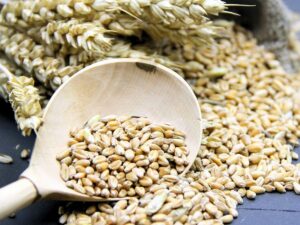
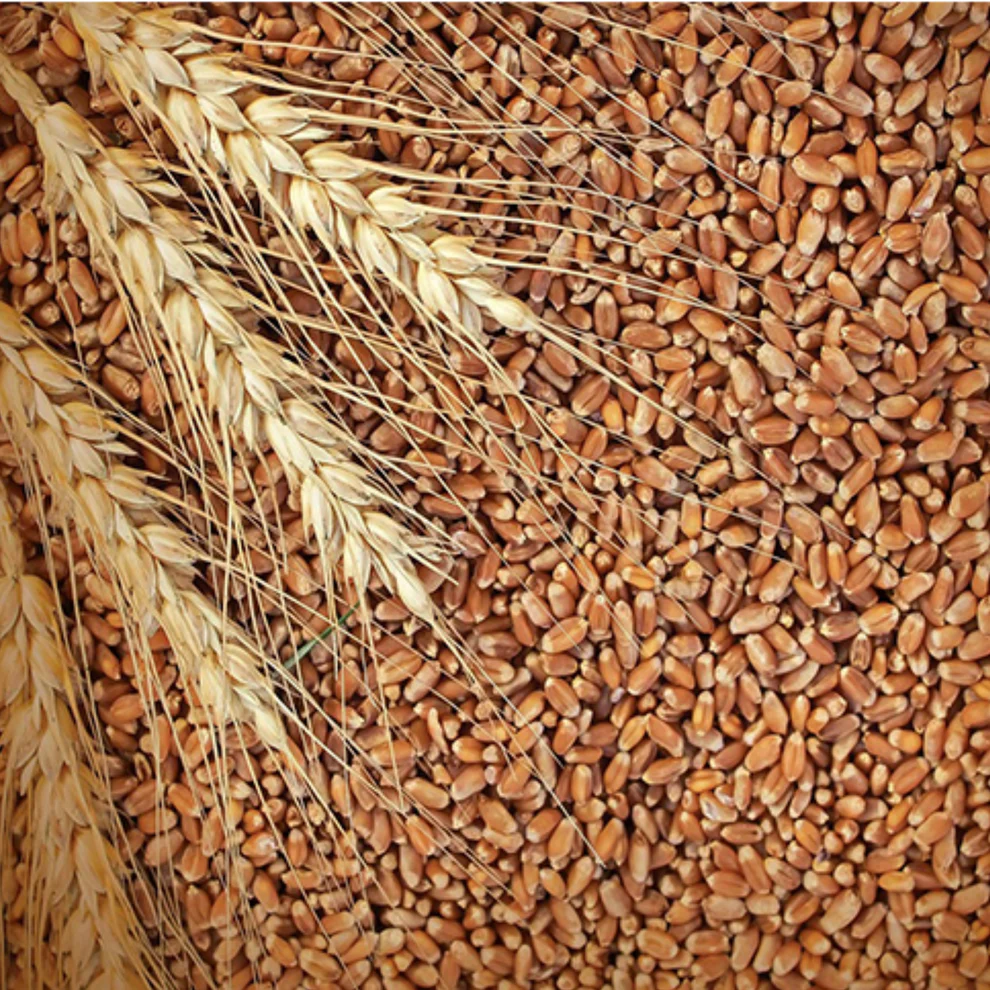
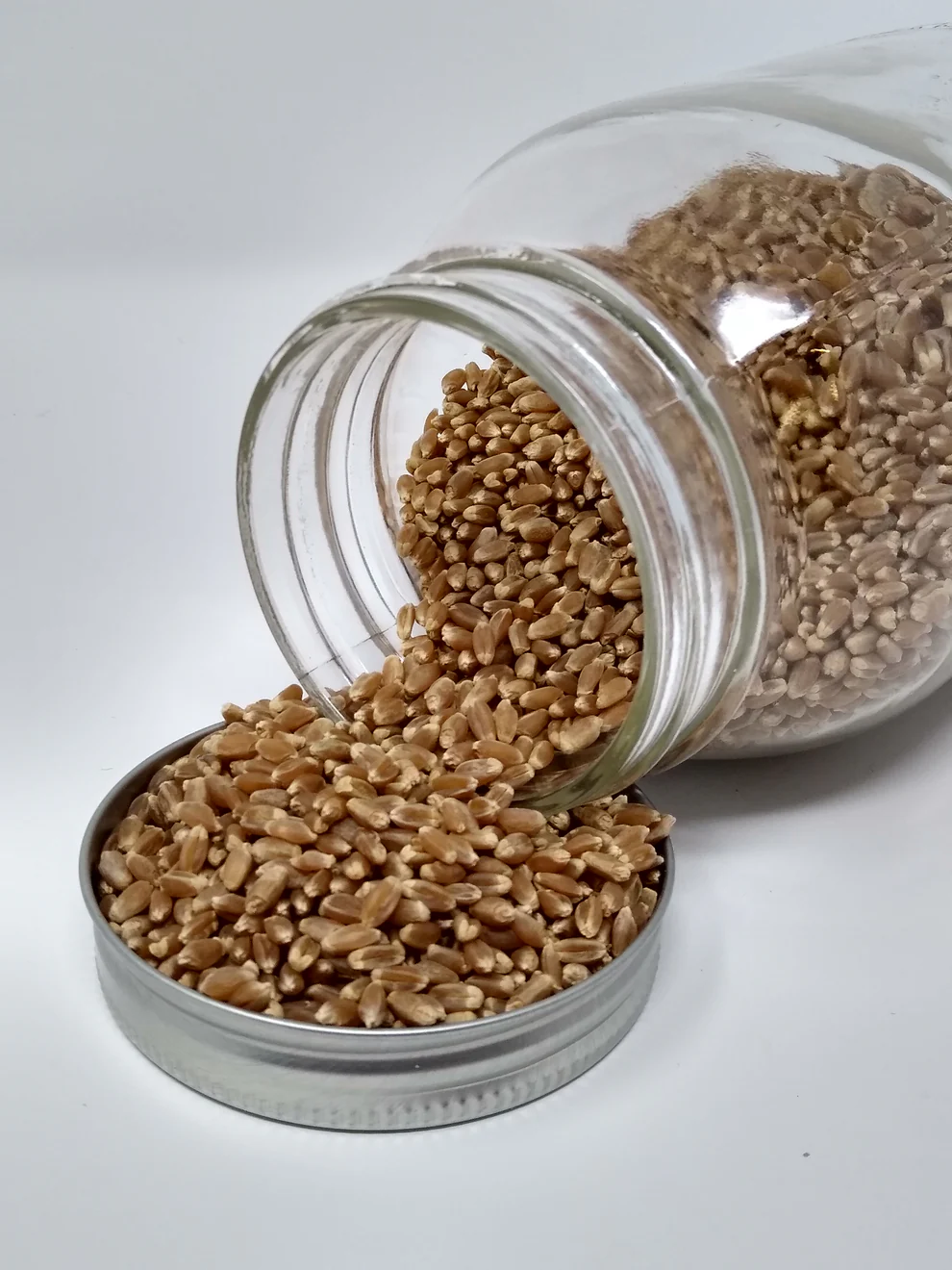
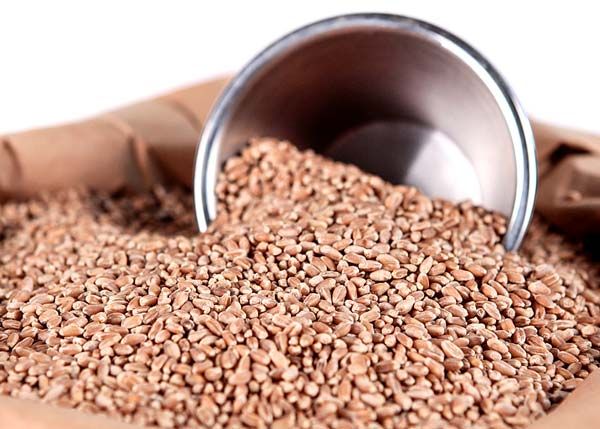
Organic hard red milling wheat for bread flour production. Protein 11.5-13.5%, falling number 250s min, test weight 76 kg/hL. IFOAM-certified, recognized by EU, USDA NOP, and JAS. Bulk vessel or containerized. FOB/CFR/CIF terms. Counter-seasonal harvest November-February fills Northern Hemisphere supply gaps. 15-25% lower cost than U.S. and EU organic wheat. Strong gluten properties for industrial bread flour. Full transaction certificate traceability.
| Parameter | Specification |
|---|---|
| Type | Organic Hard Red |
| Protein | 11.5–13.5% |
| Moisture | 13.5% max |
| Test Weight | 76 kg/hL min |
| Falling Number | 250s min |
| Packaging | Bulk/Container |
| Terms | FOB/CFR/CIF |
| Origin | Brazil |
SAI AGRO BRAZIL is a Brazilian exporter of organic hard red milling wheat, supplying flour mills, bakery ingredient producers, and industrial food processors worldwide. Our organic milling wheat delivers protein content 11.5-13.5% with falling number 250 seconds minimum and test weight 76 kg/hL, ideal for bread flour production. IFOAM-accredited certification recognized by EU EC 834/2007, USDA NOP, and JAS. Shipment terms include FOB, CFR, and CIF from Paranagua and Rio Grande ports with counter-seasonal availability November-February when Northern Hemisphere organic wheat is limited. All shipments include organic transaction certificates, MAPA phytosanitary certification, and independent inspection by SGS, Bureau Veritas, or Cotecna.
Organic milling wheat is hard red wheat grown on certified organic farms without synthetic pesticides, herbicides, or fertilizers, specifically cultivated for flour milling and bread production. Brazil’s organic wheat production is concentrated in three southern states: Parana (40% of organic wheat acreage), Rio Grande do Sul (35%), and Santa Catarina (20%), with remaining production in Mato Grosso do Sul and Sao Paulo state. These subtropical regions benefit from distinct seasons with cool winters and warm summers, producing hard red wheat with strong gluten properties ideal for bread flour.
Brazil produces approximately 10 million metric tons of wheat annually (2025 estimate, CONAB), with organic wheat representing 2-3% of total production (200,000-300,000 metric tons). Organic certification in Brazil follows IFOAM standards, with certification bodies accredited by INMETRO and recognized by the European Union (EC 834/2007), United States Department of Agriculture National Organic Program (USDA NOP), and Japanese Agricultural Standard (JAS). SAI AGRO BRAZIL sources organic milling wheat from farms certified by accredited bodies including Ecocert, Control Union, and IMO.
Hard red wheat is the wheat class most valued by flour millers for bread flour production because it contains high levels of gluten-forming proteins, specifically glutenin and gliadin, which create a strong, elastic dough network. This gluten strength allows the dough to retain gas produced by yeast fermentation, resulting in bread with good volume, uniform crumb structure, and desirable chew texture. Brazilian organic hard red wheat, grown in the subtropical regions of Parana and Rio Grande do Sul, consistently delivers protein content in the 11.5% to 13.5% range with gluten strength that meets the requirements of industrial bread flour specifications.
The falling number of 250 seconds minimum confirms low alpha-amylase activity, which means the starch in the flour will not break down excessively during dough fermentation, giving bakers predictable and consistent performance in high-speed commercial baking operations. Test weight of 76 kg/hL minimum indicates plump, well-filled kernels with high milling yield (typically 72-75% flour extraction rate). Brazilian organic hard red wheat benefits from the country’s well-established organic agriculture infrastructure, including a large network of certified organic farms, accredited certifiers operating under both Brazilian and international standards, and modern grain handling and port facilities in the southern states.
Brazilian organic milling wheat offers three competitive advantages for international buyers. First, counter-seasonal availability: Brazilian organic wheat harvests during November through February, which corresponds to the summer season in South America. This counter-seasonal window means Brazilian organic wheat becomes available for export during the first quarter of the calendar year, a period when Northern Hemisphere organic wheat from Canada, the United States, and Europe is either not yet harvested or already committed to forward contracts, giving buyers a valuable supply alternative.
Second, competitive pricing: Brazilian organic milling wheat typically costs 15-25% less than equivalent organic wheat from the United States, Canada, or European Union, due to lower production costs and favorable exchange rates. Price premium for Brazilian organic wheat typically ranges 20-30% above conventional wheat, compared to 30-40% premium for organic wheat from Northern Hemisphere origins. Third, certification recognition: Brazilian organic certification bodies are accredited by IFOAM and recognized by major organic markets including the EU, USDA NOP, and JAS, facilitating market access for buyers. The Brazilian agricultural research institution EMBRAPA has developed wheat cultivars adapted to subtropical conditions that deliver strong gluten properties and protein levels suitable for bread flour production.
| Parameter | Specification | Test Method |
|---|---|---|
| Product Name | Organic Milling Wheat (Hard Red) | Visual inspection |
| Origin | Brazil (Parana, Rio Grande do Sul, Santa Catarina) | Certificate of Origin |
| Wheat Class | Hard Red Wheat | Visual inspection, kernel hardness |
| Certification | Organic (certified by accredited body) | IFOAM-accredited certifier |
| Protein Content | 11.5% to 13.5% (contractual, based on buyer specification) | Kjeldahl or Dumas method (AOAC 990.03) |
| Moisture | 13.5% maximum | Moisture meter (AOAC 925.10) |
| Test Weight | 76 kg/hL minimum | Weight per hectoliter measurement |
| Gluten Strength | Suitable for bread flour production (strong gluten) | Gluten index, farinograph (ICC 115/1) |
| Falling Number | 250 seconds minimum (indicates low alpha-amylase activity) | Falling number test (ICC 107/1) |
| Foreign Matter | 2% maximum | Sieve analysis |
| Broken Kernels | 3% maximum | Visual inspection |
| Defective Kernels | 2% maximum | Visual inspection |
| Wheat Bug Damage | 1% maximum | Visual inspection |
| Ergot | 0.05% maximum | Visual inspection, microscopic analysis |
| Live Insects | None, free from live infestation | Visual inspection, trapping |
| Packaging | Bulk vessel or containerized (no bagged standard) | N/A |
| Shelf Life | 6-9 months under proper storage conditions | Storage stability testing |
| Storage Conditions | Dry, ventilated warehouse below 20°C, monitored for moisture and pest activity | N/A |
Test methods follow ICC (International Association for Cereal Science and Technology) and AOAC (Association of Official Analytical Chemists) official methods. Independent inspection agencies (SGS, Bureau Veritas, Cotecna) verify all parameters at the port of loading before shipment. Falling number testing confirms low alpha-amylase activity for optimal baking performance. Gluten index and farinograph testing confirm strong gluten properties suitable for bread flour production.
Every shipment of Brazilian organic milling wheat includes comprehensive documentation. The organic certificate, issued by IFOAM-accredited certification bodies (Ecocert, Control Union, IMO), confirms the wheat was grown on certified organic farms following strict protocols prohibiting synthetic pesticides, herbicides, and fertilizers. The transaction certificate traces the organic lot from certified farm through processing facilities to final shipment, maintaining chain of custody documentation required by most international organic regulations including EU EC 834/2007, USDA NOP, and JAS.
Additional documentation includes phytosanitary certificate from MAPA (Brazilian Ministry of Agriculture) confirming the shipment meets destination country plant health requirements, certificate of origin from the Brazilian Chamber of Commerce establishing Brazilian source for customs clearance, and quality/weight certificate from independent inspection agencies (SGS, Bureau Veritas, Cotecna) verifying shipment specifications. Fumigation certificate (confirming organic-compliant treatment or no treatment) is provided upon request. Buyers should specify certification requirements during quotation to ensure documentation meets destination market organic standards.
Brazilian organic milling wheat serves six primary applications in the food processing industry. Flour mills use organic hard red wheat as the primary raw material for producing organic bread flour, all-purpose flour, and high-gluten flour. Flour mills blending wheat from multiple origins use Brazilian organic wheat to achieve target protein levels (11.5-13.5%) and gluten strength in their final flour specifications. Bakery ingredient producers manufacture pre-mixes, dough conditioners, and bakery formulations using organic milling wheat to produce organic-certified intermediate ingredients for the commercial baking industry.
Industrial food processors producing organic breads, rolls, tortillas, pasta, and other wheat-based products require consistent supply of organic milling wheat to maintain production schedules and organic certification compliance. Organic food manufacturers creating certified organic consumer food products, including crackers, cereals, snacks, and baked goods, source organic milling wheat to ensure their entire supply chain meets organic standards from raw material through finished product. Whole grain and specialty flour production uses organic hard red wheat for stone-milled or roller-milled whole wheat flour, graham flour, and specialty bread flours sold through health food channels, organic retail, and direct-to-consumer brands. Organic animal feed production uses wheat that does not meet milling-grade specifications for organic livestock feed production, where it serves as a high-energy feed ingredient for organic poultry, swine, and dairy operations.
Our primary buyer segments for organic milling wheat include: (1) Flour mills producing organic bread flour, all-purpose flour, and high-gluten flour, with annual requirements of 5,000-50,000 metric tons; (2) Bakery ingredient manufacturers creating pre-mixes, dough conditioners, and bakery formulations, with monthly requirements of 200-2,000 metric tons; (3) Industrial food processors producing organic breads, rolls, tortillas, pasta, and wheat-based products, with annual requirements of 2,000-20,000 metric tons; (4) Organic food manufacturers creating crackers, cereals, snacks, and baked goods, with quarterly requirements of 500-5,000 metric tons; (5) Whole grain and specialty flour producers serving health food channels and organic retail, with monthly requirements of 100-1,000 metric tons; (6) Organic livestock feed producers using non-milling-grade wheat for organic poultry, swine, and dairy operations, with annual requirements of 1,000-10,000 metric tons.
SAI AGRO BRAZIL serves buyers across Europe (Germany, Netherlands, France, UK, Italy, Spain), North America (United States, Canada, Mexico), Asia (Japan, South Korea, Taiwan, Hong Kong, Singapore), Middle East (Turkey, UAE, Saudi Arabia), Africa (Nigeria, South Africa, Kenya), and Oceania (Australia, New Zealand). Pricing typically ranges 20-30% above conventional wheat, compared to 30-40% premium for organic wheat from Northern Hemisphere origins. Pricing is quoted per metric ton in USD and varies based on protein content, certification requirements, shipment volume, and current market conditions. Contact our trade desk with your specific requirements for a current quotation.
Brazilian organic milling wheat is shipped in bulk format to maintain efficiency and protect the organic integrity of the grain throughout the supply chain. Bulk vessel shipments load directly into vessel holds using pneumatic or grab-crane systems at Brazilian port terminals, suitable for high-volume orders of 10,000 to 50,000 metric tons. Containerized shipments use food-grade bulk liners inside standard 20-foot shipping containers, with each container holding approximately 25 to 28 metric tons. The food-grade polyethylene bulk liner is sealed to prevent contamination and moisture ingress during transit.
Loading ports include Paranagua (Parana state), Rio Grande (Rio Grande do Sul state), and Santos (Sao Paulo state). Paranagua handles 50% of Brazilian wheat exports, Rio Grande handles 30%, and Santos handles 15%, with remaining volume from smaller ports. Average port turnaround time: 5-7 days at Paranagua, 4-6 days at Rio Grande, 7-10 days at Santos (2025 ANTAQ data). Shipment terms include FOB (Free On Board), CFR (Cost and Freight), and CIF (Cost, Insurance, and Freight) Incoterms 2020. Organic integrity maintained through strict chain of custody documentation from farm to vessel, with cleaning certificates for containers and vessel holds.
| Destination Region | Transit Time (Days) | Primary Ports |
|---|---|---|
| Europe (Rotterdam, Hamburg, Antwerp) | 18-25 days | Paranagua, Rio Grande |
| North America (New York, Los Angeles, Vancouver) | 20-28 days | Paranagua, Rio Grande |
| East Asia (Tokyo, Seoul, Taipei) | 25-32 days | Paranagua, Rio Grande |
| Southeast Asia (Singapore, Jakarta, Manila) | 30-38 days | Paranagua, Rio Grande |
| Middle East (Jebel Ali, Jeddah, Istanbul) | 22-30 days | Paranagua, Rio Grande |
| North Africa (Casablanca, Alexandria) | 20-28 days | Paranagua, Rio Grande |
| Oceania (Sydney, Auckland) | 30-38 days | Paranagua, Rio Grande |
| Mexico (Manzanillo, Veracruz) | 20-28 days | Paranagua, Rio Grande |
Transit times based on 2025 shipping data from major Brazilian ports. Actual transit times vary based on vessel speed, weather conditions, and port congestion. Total lead time from order confirmation to vessel departure includes 20-35 days for quality testing, documentation preparation, and container/vessel loading, subject to harvest season and stock availability. The 6-9 month shelf life under proper storage conditions requires careful inventory management and production planning. Organic integrity maintained through strict segregation protocols and food-grade packaging throughout the supply chain.
Organic wheat in southern Brazil follows a counter-seasonal growing cycle compared to the Northern Hemisphere. Planting takes place from May through August, during the southern Brazilian winter. The wheat matures through the spring months, and harvest occurs from November through February, which corresponds to the summer season in South America. This counter-seasonal window means that Brazilian organic wheat becomes available for export during the first quarter of the calendar year, a period when Northern Hemisphere organic wheat from Canada, the United States, and Europe is either still in storage from the previous summer harvest or not yet available from the new planting.
Buyers who source organic wheat from Brazil through SAI AGRO BRAZIL can use this counter-seasonal availability to maintain year-round supply continuity and reduce dependence on a single geographic origin. Current crop availability for 2026: March-August supply from southern Brazil’s 2025/26 harvest (planted May-August 2025, harvested November 2025-February 2026). September-January 2027 supply from southern Brazil’s 2026/27 harvest (planted May-August 2026, harvested November 2026-February 2027). Forward pricing available for buyers locking in supply contracts 3-12 months ahead of delivery.
Hard red wheat is the wheat class most valued by flour millers for bread flour production because it contains high levels of gluten-forming proteins, specifically glutenin and gliadin, which create a strong, elastic dough network. This gluten strength allows the dough to retain gas produced by yeast fermentation, resulting in bread with good volume, uniform crumb structure, and desirable chew texture. Brazilian organic hard red wheat, grown in the subtropical regions of Parana and Rio Grande do Sul, consistently delivers protein content in the 11.5% to 13.5% range with gluten strength that meets the requirements of industrial bread flour specifications. The falling number of 250 seconds minimum confirms low alpha-amylase activity, which means the starch in the flour will not break down excessively during dough fermentation, giving bakers predictable and consistent performance in high-speed commercial baking operations.
Brazilian organic wheat is certified under the Brazilian organic regulation Lei 10.831/2003, which governs organic production, processing, and labeling in Brazil. In addition, the organic certification bodies operating in Brazil are accredited to certify against international organic standards, including the European Union organic regulation EC 834/2007 (and its successor regulations), the United States Department of Agriculture National Organic Program (USDA NOP), and the Japanese Agricultural Standard (JAS) for organic products. When buyers place an order for organic milling wheat through SAI AGRO BRAZIL, we confirm which organic standard applies to their market and ensure the wheat is sourced from farms and handled through supply chains certified to that specific standard. Each shipment is accompanied by a Transaction Certificate that traces the organic lot from the certified farm to the buyer.
Organic wheat in southern Brazil follows a counter-seasonal growing cycle compared to the Northern Hemisphere. Planting takes place from May through August, during the southern Brazilian winter. The wheat matures through the spring months, and harvest occurs from November through February, which corresponds to the summer season in South America. This counter-seasonal window means that Brazilian organic wheat becomes available for export during the first quarter of the calendar year, a period when Northern Hemisphere organic wheat from Canada, the United States, and Europe is either still in storage from the previous summer harvest or not yet available from the new planting. Buyers who source organic wheat from Brazil through SAI AGRO BRAZIL can use this counter-seasonal availability to maintain year-round supply continuity and reduce dependence on a single geographic origin.
Maintaining organic integrity during bulk shipment requires strict chain of custody controls from the certified farm through to the loading port and onto the vessel or container. SAI AGRO BRAZIL works with certified organic grain handlers and port operators who follow documented organic handling procedures. For containerized shipments, food-grade bulk liners are installed in clean containers that have been inspected and certified free from residual synthetic fumigants or prohibited substances. For bulk vessel shipments, the vessel hold is cleaned and inspected prior to loading, and a cleaning certificate is issued. Throughout the process, the organic Transaction Certificate follows the lot, and no synthetic fumigants, pesticides, or prohibited substances are applied to the grain at any point in the supply chain. Buyers who require specific organic integrity assurances, such as residue testing for prohibited substances prior to shipment, can request these as part of their contract specifications.
The minimum order quantity for organic milling wheat is contractual and depends on the buyer’s volume requirements, destination port, and whether the shipment is by bulk vessel or containerized. For containerized shipments using food-grade bulk liners in 20-foot containers, a typical minimum is one container load, which holds approximately 25 to 28 metric tons. For larger volume requirements, bulk vessel shipments of 10,000 metric tons or more can be arranged. Annual supply contracts with fixed volume commitments and formula-based or fixed pricing are available for flour mills and food processors who need consistent organic wheat supply throughout the year. Contact our trade desk with your required protein specification, volume, destination port, and shipment timing to receive a tailored offer.
Every shipment of organic milling wheat from SAI AGRO BRAZIL includes a comprehensive documentation package. The standard documents are the Organic Certificate and Transaction Certificate confirming the organic status of the grain, the Phytosanitary Certificate issued by MAPA (Brazilian Ministry of Agriculture) confirming the wheat is free from quarantine pests, the Certificate of Origin for customs clearance and tariff purposes, and a Laboratory Analysis Certificate from an accredited grain inspection company covering protein, moisture, test weight, falling number, foreign matter, and other quality parameters per buyer specification. Additional documents such as fumigation certificates (confirming organic-compliant treatment or no treatment), weight certificates, insurance certificates, and vessel cleaning certificates are provided based on buyer requirements and destination country import regulations.
Brazilian organic milling wheat typically costs 15-25% less than equivalent organic wheat from the United States, Canada, or European Union, due to lower production costs and favorable exchange rates. Price premium for Brazilian organic wheat typically ranges 20-30% above conventional wheat, compared to 30-40% premium for organic wheat from Northern Hemisphere origins. Pricing is quoted per metric ton in USD and varies based on protein content, certification requirements, shipment volume, and current market conditions. Payment terms include Letter of Credit (L/C) at sight for new buyers and open account terms for established buyers with credit history. Forward pricing available for buyers locking in supply contracts 3-12 months ahead of delivery. Contact our trade desk with your specific requirements for a current quotation and pricing structure.
Transit times from Brazil vary by destination region. Europe: 18-25 days. North America: 20-28 days. East Asia: 25-32 days. Southeast Asia: 30-38 days. Middle East: 22-30 days. North Africa: 20-28 days. Oceania: 30-38 days. Mexico: 20-28 days. Total lead time from order confirmation to vessel departure includes 20-35 days for quality testing, documentation preparation, and container/vessel loading, subject to harvest season and stock availability. The 6-9 month shelf life under proper storage conditions requires careful inventory management and production planning. Contact our logistics team with your destination port for precise transit time estimates.
SAI AGRO BRAZIL
Share your volume, destination and trade preference. Our commercial desk will review your requirement and reply within 24-48 hours
WhatsApp Us
Adding {{itemName}} to cart
Added {{itemName}} to cart