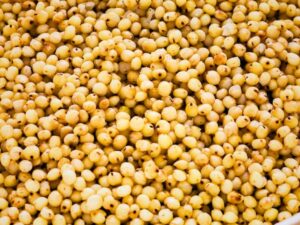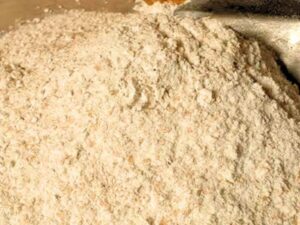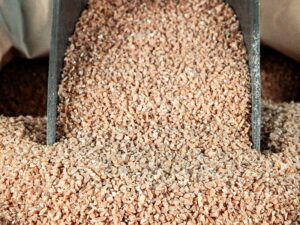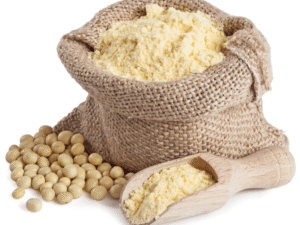

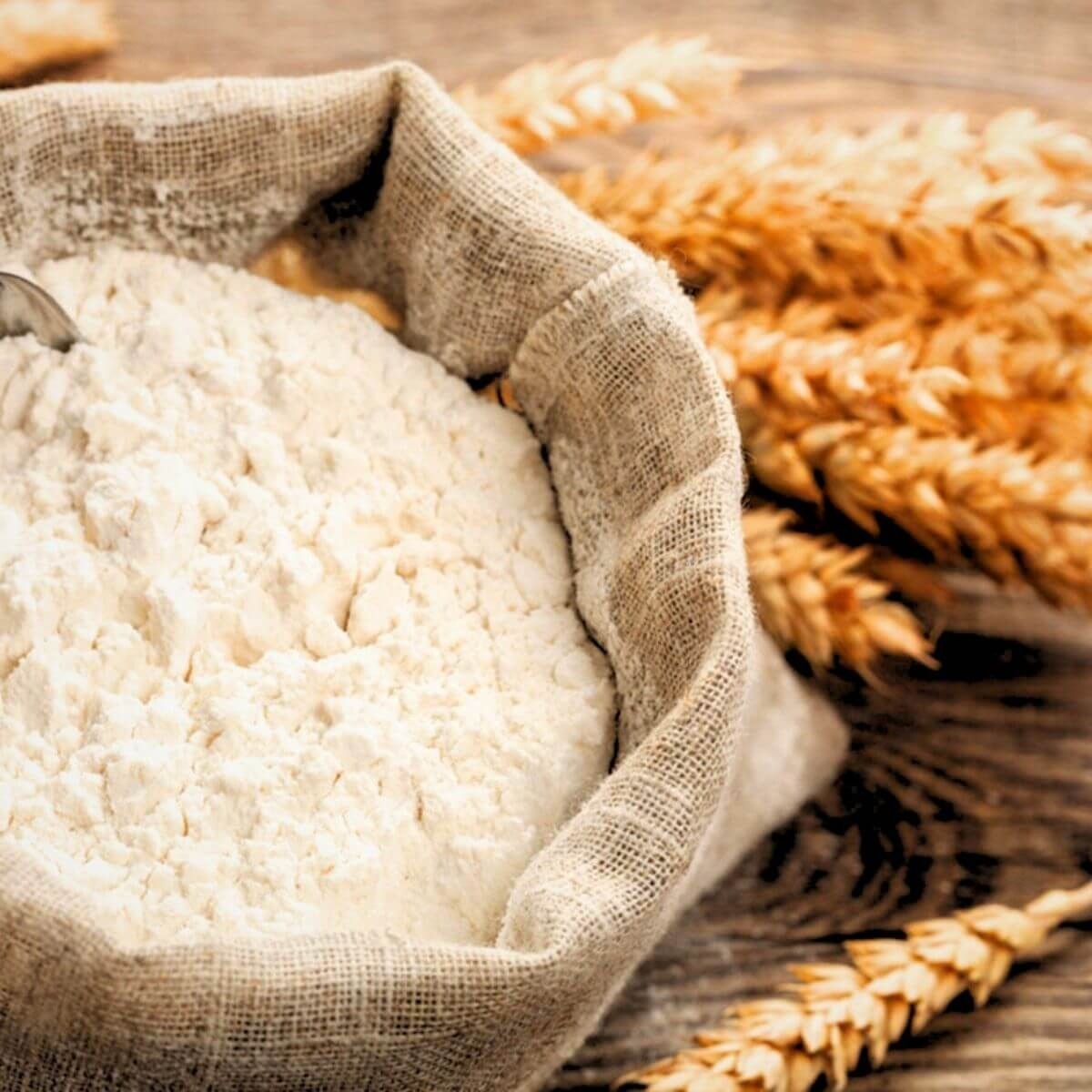
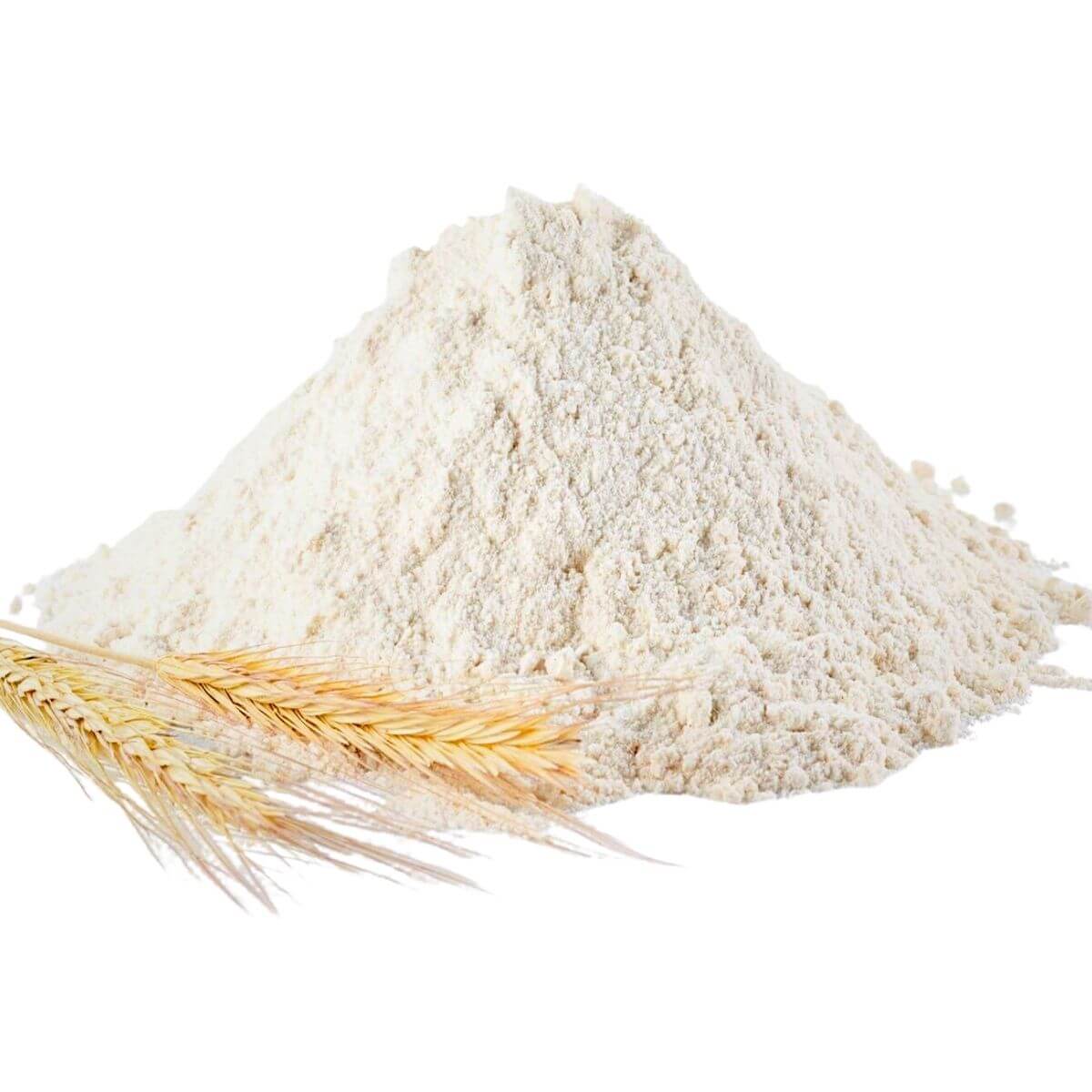
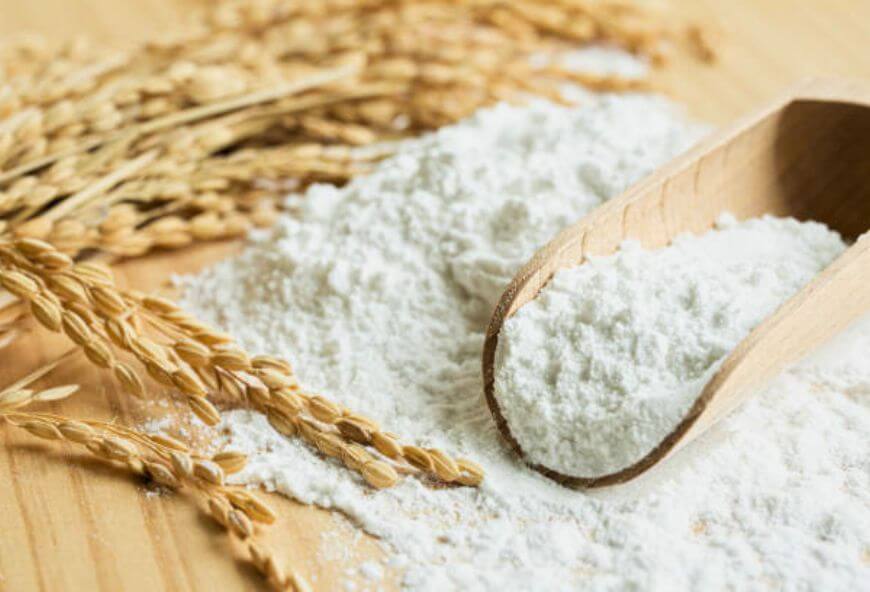
Native wheat starch from Brazil for food processing, paper manufacturing, textile sizing, adhesive production, and pharmaceutical applications. Produced through wheat flour wet-milling, yielding high-purity starch (85% min dry basis) with low protein (0.3% max) and neutral flavor profile. Available in food grade (Codex-compliant) and industrial grade. 25kg/50kg multi-wall paper bags or 1,000kg bulk bags. FOB/CFR/CIF from Santos and Paranaguá ports. MOQ 20 MT per shipment. Competitive pricing versus corn starch and potato starch for industrial buyers.
| Parameter | Specification |
|---|---|
| Starch Content | 85% min (dry basis) |
| Protein | 0.3% max (dry basis) |
| Moisture | 13% max |
| pH | 5.0–7.0 |
| MOQ | 20 MT |
| Terms | FOB / CFR / CIF |
| Origin | Brazil |
| Type | Native Wheat Starch |
SAI AGRO BRAZIL supplies native wheat starch from Brazilian wheat processing facilities to food manufacturers, paper mills, textile processors, and industrial buyers worldwide. Wheat starch is extracted from wheat flour through a wet-milling process that separates starch granules from gluten and fiber. Our wheat starch delivers minimum 85% starch content (dry basis), maximum 0.3% protein, and consistent gelatinization temperature (52-63°C), making it suitable for a wide range of industrial and food applications. As a wheat-based starch, it offers distinct functional properties versus corn starch, including lower gelatinization temperature, higher paste viscosity stability, and a more neutral flavor in food applications. Brazil’s expanding wheat processing sector provides reliable supply with competitive pricing relative to European and North American starch producers.
SAI AGRO BRAZIL supplies native wheat starch produced by Brazilian wheat processing facilities to industrial and food manufacturing buyers worldwide. Wheat starch is a carbohydrate extracted from wheat flour through wet-milling — a process that separates starch granules from protein (gluten), fiber, and other components. The result is a fine white powder with 85%+ starch content, neutral flavor, and consistent functional properties.
Brazil’s wheat processing industry has grown alongside the country’s expanding wheat production (9.5 million MT in 2025/26). Wheat starch production utilizes the B-starch fraction from wheat flour milling, creating value from what would otherwise be a byproduct stream. Brazilian wheat starch competes on quality with European and Asian producers while offering logistical advantages for buyers in the Americas, Africa, and the Middle East through Atlantic port access at Santos and Paranaguá.
Wheat starch offers distinct advantages over competing starches. Gelatinization temperature of 52-63°C is 5-10°C lower than corn starch (62-72°C), reducing energy consumption in processing applications. The bimodal granule size distribution (small B-granules 2-10 μm + large A-granules 20-35 μm) provides unique textural properties — small granules contribute to smooth mouthfeel in food applications and effective surface coverage in paper coating. Wheat starch paste exhibits higher viscosity stability during cooling than corn starch, important for adhesive and paper applications. For food manufacturers, wheat starch has a more neutral flavor than corn starch, making it preferred for delicately flavored products. Price positioning: wheat starch typically trades between corn starch (lower) and potato starch (higher) on global markets.
| Parameter | Food Grade | Industrial Grade | Test Method |
|---|---|---|---|
| Appearance | White fine powder | White to off-white powder | Visual |
| Starch Content | 85% min (dry basis) | 83% min (dry basis) | Ewers polarimetric |
| Protein (N×6.25) | 0.3% max (dry basis) | 0.5% max (dry basis) | Kjeldahl method |
| Moisture | 13% max | 13% max | AACC 44-15A |
| Ash | 0.3% max (dry basis) | 0.5% max (dry basis) | AACC 08-01 |
| pH (10% slurry) | 5.0-7.0 | 5.0-7.5 | Potentiometric |
| Gelatinization Temp | 52-63°C | 52-63°C | DSC analysis |
| Viscosity (10% paste, 95°C) | 400-800 BU | 300-700 BU | Brabender Amylograph |
| Granule Size (A-type) | 20-35 μm | 20-35 μm | Laser diffraction |
| Packaging | 25kg/50kg multi-wall paper bags, 1,000kg bulk bags | N/A | |
| MOQ | 20 Metric Tons | N/A | |
| Shipment Terms | FOB, CFR, CIF (Incoterms 2020) | N/A | |
Test methods follow AACC International, ISO, and Codex Alimentarius standards. Certificate of Analysis (COA) provided with every shipment. Food grade wheat starch complies with Codex Stan 151-1989 for native starches.
Brazilian wheat starch serves five major industrial sectors. Paper manufacturing: surface sizing agent that improves surface strength, printability, and stiffness of paper and paperboard; coating binder in pigmented coatings for improved gloss and smoothness. Textile industry: warp sizing agent that strengthens yarn during weaving, reducing thread breakage and improving weaving efficiency. Corrugated board: key component of Stein-Hall adhesive formulations where wheat starch’s high paste viscosity provides strong bonding in corrugated boxes. Adhesive production: base material for wallpaper paste, envelope gums, and label adhesives. Pharmaceuticals: tablet disintegrant (Type A wheat starch per pharmacopeia standards) and capsule filler in solid dosage forms.
Food-grade wheat starch serves multiple food processing segments. Noodle and pasta: improves dough extensibility and reduces cooking loss in Asian noodles and Italian pasta when used at 5-15% of flour weight. Sauces and soups: thickener and stabilizer providing clean flavor release and excellent freeze-thaw stability. Bakery: gluten replacement in gluten-free bread formulations; improves crumb softness and extends shelf life in wheat bread. Confectionery: molding starch for gum candies and jelly confections. Meat processing: water binder and texture improver in emulsified meat products. Brazil’s strong wheat processing sector ensures reliable supply of food-grade starch that meets international food safety standards including Codex Alimentarius, EU food additive regulation (E1404 for native starch), and FDA 21 CFR for food starch.
Primary buyer profiles: (1) Paper mills in Southeast Asia, Middle East, and Africa requiring 50-500 MT monthly for surface sizing and coating operations; (2) Corrugated board manufacturers producing packaging for e-commerce and export industries demanding high-performance Stein-Hall adhesives; (3) Food processors manufacturing noodles, sauces, and gluten-free bakery products; (4) Textile manufacturers in South Asia and Middle East using starch for warp sizing; (5) Pharmaceutical manufacturers requiring compendial-grade starch (USP/NF, Ph. Eur.) for tablet formulations; (6) Industrial starch distributors supplying smaller processors across regional markets.
Wheat starch ships in 20-foot dry containers loaded with bagged product. Standard loading configurations: 20 MT per 20-foot container (800 × 25kg bags or 400 × 50kg bags). Larger shipments use 40-foot containers (25-27 MT payload). For bulk buyers, 1,000 kg jumbo bags maximize container payload. Containerized shipping ensures product protection from moisture and contamination throughout transit. Loading ports: Santos (São Paulo) and Paranaguá (Paraná) provide regular container vessel services to all major global trade routes. Average port dwell time: 3-5 days for bagged containerized cargo. Total lead time: 10-14 days for production scheduling, packaging, and documentation plus ocean transit time.
| Destination Region | Transit Time (Days) | Port Examples |
|---|---|---|
| Europe (Rotterdam, Hamburg, Antwerp) | 18-25 days | Santos, Paranaguá |
| Middle East (Jebel Ali, Jeddah, Dammam) | 22-30 days | Santos |
| Southeast Asia (Singapore, Jakarta, Bangkok) | 30-38 days | Santos, Paranaguá |
| China (Shanghai, Ningbo, Qingdao) | 28-35 days | Santos, Paranaguá |
| North Africa (Casablanca, Alexandria) | 20-28 days | Santos |
| West Africa (Lagos, Tema, Abidjan) | 18-25 days | Santos |
| North America (Houston, New York) | 15-22 days | Santos |
Transit times based on 2025 container shipping data. Container freight rates for bagged starch vary seasonally — contact our logistics team for current rates to your destination port.
We export two grades: Food Grade (minimum 85% starch, 0.3% max protein, Codex-compliant) for food processing, pharmaceuticals, and applications requiring high purity; and Industrial Grade (minimum 83% starch, 0.5% max protein) for paper, textile, adhesive, and non-food manufacturing. Both are native (unmodified) wheat starch. Modified wheat starch (cross-linked, oxidized, acetylated) may be available upon request subject to minimum order quantities.
Each shipment includes: Certificate of Analysis with full specification test results; phytosanitary certificate (food grade); certificate of origin (Brazilian Chamber of Commerce); and quality/weight certificate (SGS/Bureau Veritas). Food grade shipments include Codex Alimentarius compliance statement. Pharmaceutical-grade shipments available with USP/NF or Ph. Eur. compliance documentation upon request.
Wheat starch has lower gelatinization temperature (52-63°C vs 62-72°C for corn), smoother mouthfeel due to bimodal granule distribution, more neutral flavor, and higher paste clarity. For paper sizing, wheat starch provides excellent surface coverage. For food applications, wheat starch’s neutral flavor makes it preferred for clear soups, delicate sauces, and premium confectionery. Corn starch generally has lower price but may impart a cereal note. The choice depends on your specific functional requirements and formulation constraints.
MOQ is 20 metric tons (one 20-foot container load). Lead time from order confirmation to vessel departure: 10-14 days for production scheduling, quality testing, bagging, and documentation. Ocean transit varies by destination (see transit table above). Total delivery time: 28-52 days to Asia, 22-35 days to Middle East/Africa, 18-32 days to Europe. Larger orders (>100 MT) benefit from production scheduling efficiency and volume pricing.
Yes. No genetically modified wheat is commercially approved or cultivated anywhere in the world. All wheat starch produced in Brazil is inherently non-GMO. Brazilian wheat varieties are conventionally bred. For buyers requiring formal non-GMO documentation, we provide a non-GMO statement with each shipment. This is an important advantage for food manufacturers serving markets with GMO labeling requirements.
Standard packaging: 25kg multi-wall paper bags with inner PE liner; 50kg multi-wall paper bags. Bulk options: 1,000kg jumbo bags (FIBC) for high-volume industrial users. Custom packaging options including branded private label bags available for contract volumes. All packaging designed to protect starch from moisture absorption during transit and storage. Shelf life: 24 months from production date when stored in cool, dry conditions away from direct sunlight.
Contact SAI AGRO BRAZIL for competitive pricing on food grade and industrial grade wheat starch for your manufacturing requirements.
SAI AGRO BRAZIL
Share your volume, destination and trade preference. Our commercial desk will review your requirement and reply within 24-48 hours
Adding {{itemName}} to cart
Added {{itemName}} to cart