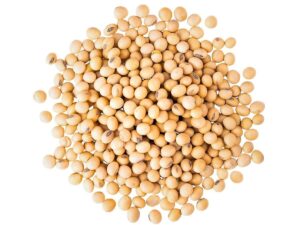
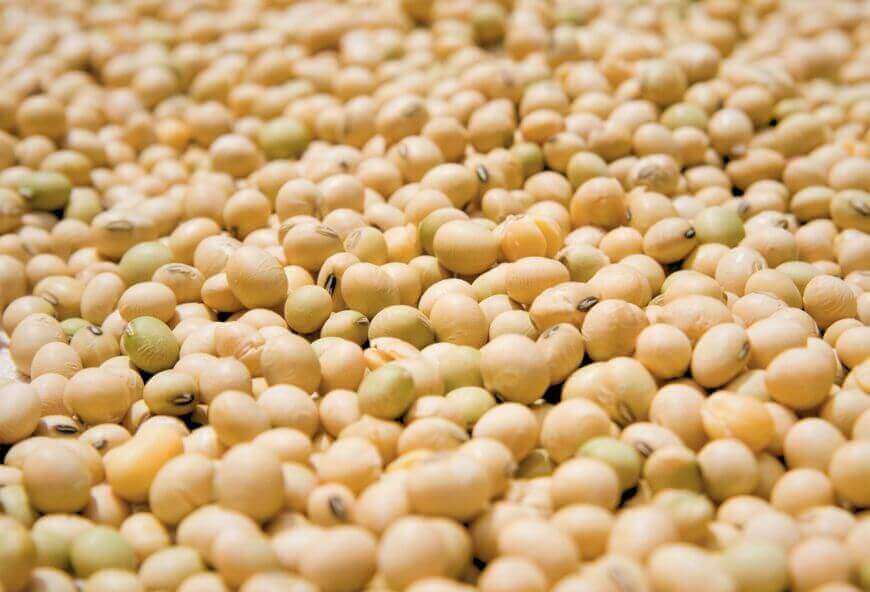
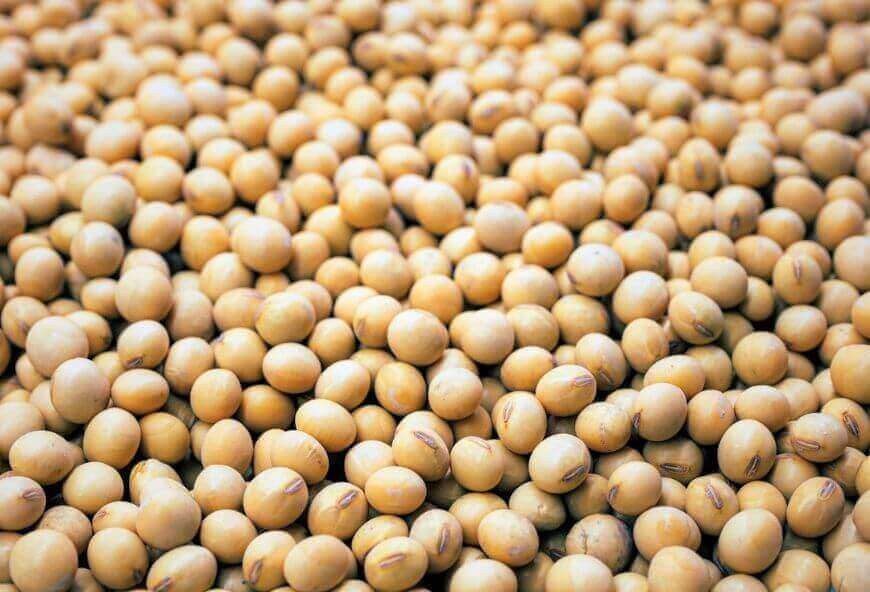
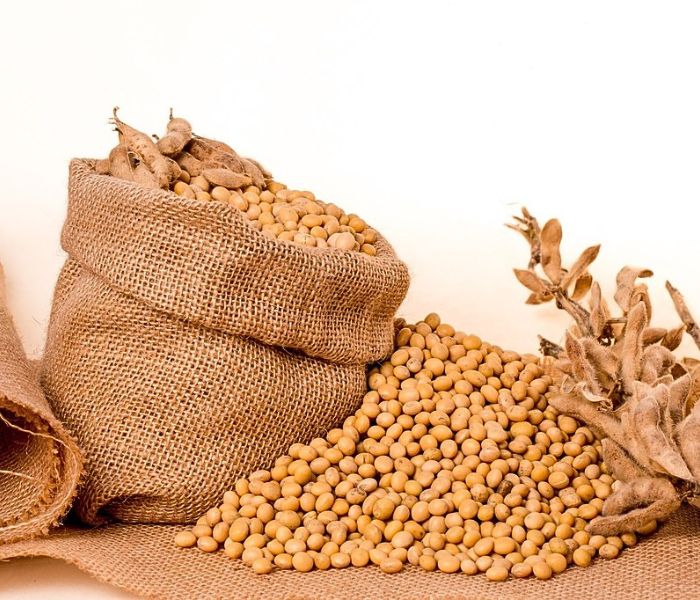
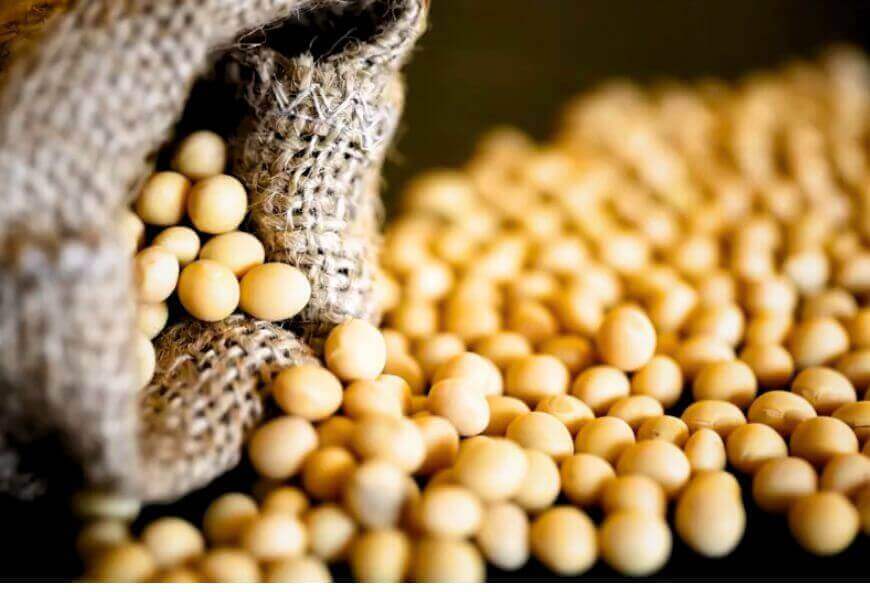
Bulk GMO soybeans from Brazil for crushing facilities, food processors, and feed manufacturers. Brazil produces 155 million metric tons annually, with 97% GMO varieties. Protein 35% basis (34% min), moisture 13.5% max. Shipped FOB/CFR/CIF from Santos and Paranagua ports. MOQ 250 MT. Full MAPA certification and SGS inspection. Year-round supply through staggered harvest windows. Competitive pricing vs. U.S. and Argentine origins.
| Specification | Value |
|---|---|
| Protein | 35% basis (34% min) |
| Moisture | 13.5% max |
| Oil | 18.5% basis |
| Test Weight | 54 lbs/bu min |
| MOQ | 250 Metric Tons |
| Terms | FOB / CFR / CIF |
| Origin | Brazil |
| Type | GMO |
SAI AGRO BRAZIL is a Brazilian exporter of bulk GMO soybeans, supplying crushing facilities, food processors, feed producers, and regional distributors worldwide. Brazil produces approximately 155 million metric tons of soybeans annually (2025/26 crop year, CONAB), with GMO varieties accounting for 97% of production. Our GMO soybeans deliver protein content 35% basis (minimum 34%), moisture 13.5% maximum, and oil content 18.5% basis. Shipment terms include FOB, CFR, and CIF from Santos, Paranagua, and Rio Grande ports with MOQ 250 metric tons. All shipments include MAPA phytosanitary certification, certificate of origin, and quality/weight certificates from SGS, Bureau Veritas, or Cotecna. Year-round supply through staggered harvest windows: March-September from Mato Grosso, October-January from Parana and Rio Grande do Sul.
SAI AGRO BRAZIL supplies bulk GMO soybeans directly from Brazil’s primary growing regions to international buyers. Brazil produces approximately 155 million metric tons of soybeans annually (2025/26 crop year, per CONAB), making it the world’s second-largest producer after the United States. GMO soybean varieties account for 97% of Brazilian production, with the remaining 3% designated for non-GMO and organic markets.
Our GMO soybeans meet international quality standards with protein content at 35% basis (minimum 34%) and moisture controlled at 13.5% maximum. The beans are fit for human consumption and processed according to protocols established by MAPA (Ministry of Agriculture, Livestock and Food Supply). We handle all export documentation including phytosanitary certificates, certificates of origin, and quality/weight certificates issued by independent inspection agencies such as SGS, Bureau Veritas, or Cotecna.
Brazilian soybean harvest occurs in two primary windows depending on the growing region. Mato Grosso, Brazil’s largest soybean-producing state, harvests from mid-September through November. Parana and Rio Grande do Sul harvest from October through January. This staggered harvest schedule means Brazilian GMO soybeans are available for export from March through September (Mato Grosso crop) and October through January (Southern crop), providing year-round supply continuity for international buyers.
Current crop availability for 2026: March-August supply from Mato Grosso’s 2025/26 harvest. September-January 2027 supply from Parana and Rio Grande do Sul’s 2026/27 harvest. Contract pricing can be locked for forward delivery based on CBOT (Chicago Board of Trade) futures plus basis differentials for Brazilian origin.
Brazilian GMO soybeans offer three competitive advantages over U.S. and Argentine origins. First, production cost: Brazilian soybeans benefit from lower land costs, double-cropping systems (soybeans followed by corn or cotton), and large-scale mechanization that achieves economies of scale. Second, counter-seasonal harvest: Brazilian soybeans harvest during Northern Hemisphere winter, providing supply when U.S. and Canadian stocks are lowest. Third, protein content: Brazilian soybeans typically deliver 34-36% protein, comparable to U.S. Gulf Coast soybeans and higher than Argentine origin.
Brazil’s port infrastructure includes specialized grain terminals at Santos (Sao Paulo state), Paranagua (Parana state), and Rio Grande (Rio Grande do Sul state). These terminals handle Panamax and Handymax vessels with loading rates of 1,000-1,500 metric tons per hour. Average port turnaround time is 7-10 days at Santos and 5-7 days at Paranagua, based on 2025 data from the Brazilian National Waterway Transportation Agency (ANTAQ).
| Parameter | Specification | Test Method |
|---|---|---|
| Type | GMO, Fit for Human Consumption | Visual inspection, GMO testing |
| Protein Content | 35% basis (34% minimum) | NIR analysis (AOCS Ba 0-02) |
| Moisture | 13.5% maximum | Moisture meter (AOCS Ba 2-02) |
| Oil Content | 18.5% basis | NIR analysis (AOCS Ba 3-02) |
| Test Weight | 54 lbs/bu minimum | Weight per bushel measurement |
| Splits | 20% maximum | Visual inspection |
| Damaged Kernels | 3% maximum | Visual inspection |
| Foreign Matter | 2% maximum | Sieve analysis |
| Packaging | Bulk Bags (1,000 kg jumbo bags) | N/A |
| Minimum Order Quantity | 250 Metric Tons | N/A |
| Shipment Terms | FOB, CFR, CIF | Incoterms 2020 |
| Origin | Brazil | Certificate of Origin |
Test methods follow AOCS (American Oil Chemists’ Society) official methods. Independent inspection agencies (SGS, Bureau Veritas, Cotecna) verify all parameters at the port of loading before shipment.
Every shipment of Brazilian GMO soybeans includes three mandatory certificates. The phytosanitary certificate, issued by MAPA, confirms the product meets plant health requirements of the destination country and is free from quarantine pests. The certificate of origin, issued by the Brazilian Chamber of Commerce, establishes the Brazilian source for customs clearance and trade agreement benefits. The quality and weight certificate, issued by independent inspection agencies (SGS, Bureau Veritas, or Cotecna), provides third-party verification of shipment specifications.
Additional documentation available upon request: fumigation certificate (for destinations requiring pre-shipment treatment), analysis certificate (detailed laboratory report covering proximate composition, mycotoxin screening, pesticide residue analysis), and temperature certificate (for shipments requiring temperature monitoring during transit). All documentation complies with ICAO and IMO regulations for agricultural commodity transport.
Brazilian GMO soybeans serve four primary market segments. Food processors use the beans for soybean oil extraction (yielding cooking oil and biodiesel feedstock), soy flour production (for bakery enrichment and meat analogs), and textured vegetable protein manufacturing (for plant-based meat alternatives). Crushing facilities process the beans to separate oil from meal, producing ingredients for cooking oil, biodiesel, and animal feed formulations.
Feed producers incorporate soybean meal into livestock rations for poultry, swine, and cattle operations. The high protein content (34-36%) makes Brazilian soybeans valuable for aquaculture feed and pet food manufacturing. Regional distributors supply the beans to local processors and manufacturers throughout their markets. The consistent quality and reliable supply make Brazilian GMO soybeans suitable for continuous production operations requiring stable raw material specifications.
Our primary buyer segments include: (1) Crushing facilities in China, Southeast Asia, and Europe that process soybeans into oil and meal; (2) Food processors manufacturing soybean oil, soy flour, textured vegetable protein, and soy protein isolates; (3) Feed manufacturers producing compound feed for poultry, swine, cattle, and aquaculture operations; (4) Regional distributors supplying processors and manufacturers within their local markets; (5) Trading companies sourcing Brazilian origin for resale to end-users.
Typical buyer profiles: crushing facilities with capacity of 1,000-5,000 metric tons per day; food processors with annual soybean requirements of 5,000-50,000 metric tons; feed manufacturers with monthly requirements of 500-5,000 metric tons; regional distributors with quarterly requirements of 1,000-10,000 metric tons. SAI AGRO BRAZIL serves buyers across Asia (China, Indonesia, Vietnam, Thailand, Philippines), Europe (Netherlands, Spain, Germany, Italy), Middle East (Turkey, Egypt, Saudi Arabia), Africa (Nigeria, South Africa, Kenya), and Latin America (Mexico, Colombia, Peru).
GMO soybeans are shipped in two formats: containerized loads (250-500 metric tons per shipment) and bulk vessel (10,000-60,000 metric tons per shipment). Containerized shipments use 20-foot or 40-foot dry containers loaded with bulk bags (1,000 kg jumbo bags) or food-grade container liners. Bulk vessel shipments load directly into vessel holds using pneumatic or grab-crane systems at Brazilian port terminals.
Loading ports: Santos (Sao Paulo state) handles 40% of Brazilian soybean exports, Paranagua (Parana state) handles 30%, and Rio Grande (Rio Grande do Sul state) handles 15%. Remaining volume ships from smaller ports including Sao Francisco do Sul, Itajai, and Antonina. Average port turnaround time: 7-10 days at Santos, 5-7 days at Paranagua, 4-6 days at Rio Grande (2025 ANTAQ data).
| Destination Region | Transit Time (Days) | Primary Ports |
|---|---|---|
| China (Shanghai, Qingdao, Dalian) | 28-35 days | Santos, Paranagua |
| Southeast Asia (Jakarta, Manila, Bangkok) | 30-38 days | Santos, Paranagua |
| Europe (Rotterdam, Hamburg, Antwerp) | 18-25 days | Santos, Paranagua |
| Middle East (Jebel Ali, Jeddah, Istanbul) | 22-30 days | Santos, Paranagua |
| North Africa (Casablanca, Alexandria) | 20-28 days | Santos, Paranagua |
| West Africa (Lagos, Tema, Abidjan) | 18-25 days | Santos |
| East Africa (Mombasa, Dar es Salaam) | 25-32 days | Santos, Paranagua |
| Mexico (Manzanillo, Veracruz) | 20-28 days | Santos, Paranagua |
| Colombia (Buenaventura, Cartagena) | 15-22 days | Santos, Paranagua |
Transit times based on 2025 shipping data from major Brazilian ports. Actual transit times vary based on vessel speed, weather conditions, and port congestion. Total lead time from order confirmation to vessel departure includes 7-14 days for quality testing, documentation preparation, and container/vessel loading.
We offer three standard Incoterms 2020 for GMO soybean exports. FOB (Free On Board) means the buyer assumes responsibility once the goods are loaded on the vessel at the Brazilian port. Buyer arranges and pays for ocean freight and insurance. CFR (Cost and Freight) means SAI AGRO BRAZIL covers ocean freight to the destination port, but buyer arranges insurance. CIF (Cost, Insurance, and Freight) means SAI AGRO BRAZIL covers ocean freight and marine insurance to the destination port.
Payment terms: Letter of Credit (L/C) at sight for new buyers; open account terms available for established buyers with credit history. Currency: USD per metric ton. Pricing basis: CBOT futures price plus Brazilian origin premium (basis), which varies by crop year, protein content, and shipment timing. Forward pricing available for buyers locking in supply contracts 3-12 months ahead of delivery.
The minimum order quantity is 250 metric tons per shipment. This applies to both containerized and bulk vessel shipments. The 250 MT minimum ensures efficient logistics (filling at least one 20-foot container with bulk bags) and competitive pricing. Buyers requiring smaller quantities should contact our sales team to discuss consolidation options with other orders or alternative product formats.
Each shipment includes three mandatory certificates: (1) Phytosanitary certificate from MAPA (Brazilian Ministry of Agriculture) confirming the product meets destination country plant health requirements; (2) Certificate of origin from the Brazilian Chamber of Commerce establishing Brazilian source for customs clearance; (3) Quality and weight certificate from independent inspection agencies (SGS, Bureau Veritas, or Cotecna) verifying shipment specifications. Additional certificates available upon request: fumigation, analysis, temperature monitoring.
We offer FOB (Free On Board), CFR (Cost and Freight), and CIF (Cost, Insurance, and Freight) Incoterms 2020. FOB means buyer assumes responsibility once goods are loaded on vessel at Brazilian port. CFR means seller covers ocean freight to destination port but buyer arranges insurance. CIF means seller covers ocean freight and marine insurance to destination port. Loading ports include Santos, Paranagua, and Rio Grande.
Quality control operates at multiple stages: (1) Farm collection: protein content tested at 35% basis with minimum 34%; (2) Warehouse consolidation: moisture controlled at 13.5% maximum to prevent spoilage; (3) Pre-shipment inspection: independent agencies (SGS, Bureau Veritas, Cotecna) verify protein, moisture, oil content, test weight, splits, damaged kernels, and foreign matter against specification limits; (4) Loading supervision: inspection agencies monitor container/vessel loading and issue quality/weight certificates.
Brazilian GMO soybeans serve four primary markets: (1) Food processors use beans for oil extraction, soy flour production, and textured vegetable protein manufacturing; (2) Crushing facilities separate beans into oil and meal for cooking oil, biodiesel, and animal feed ingredients; (3) Feed producers incorporate soybean meal into livestock rations for poultry, swine, and cattle operations; (4) Regional distributors supply processors and manufacturers within local markets. The consistent protein content (34-36%) and reliable supply make these beans suitable for continuous industrial processing.
Standard specifications apply to all shipments unless otherwise negotiated in the contract. Standard specs: protein 35% basis (34% min), moisture 13.5% max, oil 18.5% basis, test weight 54 lbs/bu min, splits 20% max, damaged kernels 3% max, foreign matter 2% max. Buyers with specific requirements beyond these standards should contact our sales team during quotation to discuss feasibility, pricing adjustments, and minimum order quantities for custom specifications.
Transit times vary by destination: China 28-35 days, Southeast Asia 30-38 days, Europe 18-25 days, Middle East 22-30 days, North Africa 20-28 days, West Africa 18-25 days, East Africa 25-32 days, Mexico 20-28 days, Colombia 15-22 days. Total lead time from order confirmation to vessel departure includes 7-14 days for quality testing, documentation, and loading. Contact our logistics team with your destination port for precise transit time estimates.
Payment terms: Letter of Credit (L/C) at sight for new buyers; open account terms available for established buyers with credit history. Currency: USD per metric ton. Pricing basis: CBOT futures price plus Brazilian origin premium (basis), which varies by crop year, protein content, and shipment timing. Forward pricing available for buyers locking in supply contracts 3-12 months ahead of delivery. Contact our trade desk for current pricing and payment term options.
SAI AGRO BRAZIL
Share your volume, destination and trade preference. Our commercial desk will review your requirement and reply within 24-48 hours
WhatsApp Us
Adding {{itemName}} to cart
Added {{itemName}} to cart