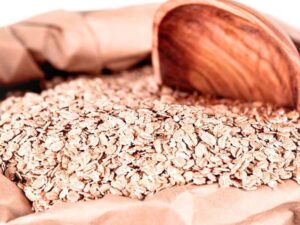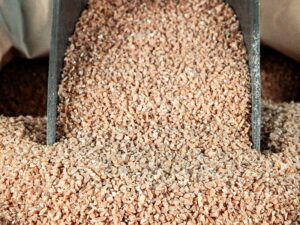

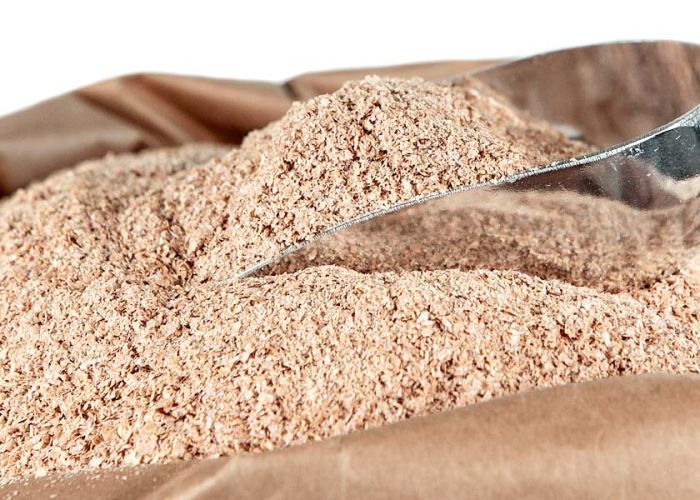
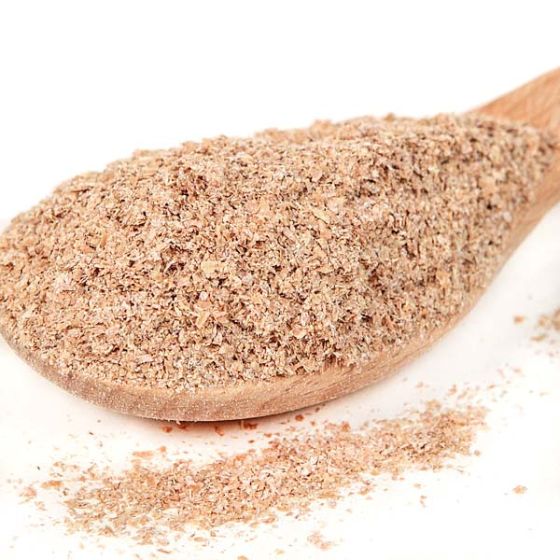
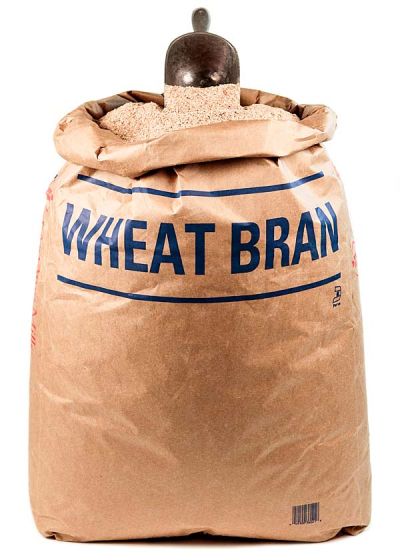
Red wheat bran for animal feed, bakery, breakfast cereals, and health foods. High dietary fiber 15-18%, protein 14-17%. Feed grade and food grade options. Moisture 12% max. 25kg, 50kg bags or bulk. FOB/CFR/CIF terms. 12-month shelf life. Brazil produces 1.5-2 million MT annually. Milling byproduct from hard red wheat flour. 15-25% lower cost than U.S. and EU origins. Coarse flakes or fine powder. Full phytosanitary certification.
| Parameter | Specification |
|---|---|
| Product | Red Wheat Bran |
| Fiber | 15-18% |
| Protein | 14-17% |
| Moisture | 12% max |
| Grade | Feed / Food |
| Packaging | 25kg / 50kg / Bulk |
| Terms | FOB / CFR / CIF |
| Origin | Brazil |
SAI AGRO BRAZIL is a Brazilian exporter of red wheat bran, supplying compound feed manufacturers, commercial bakeries, breakfast cereal producers, and health food companies worldwide. Our red wheat bran is a milling byproduct from hard red wheat flour production with high dietary fiber content (15-18%) and protein levels (14-17%). Available in both feed grade and food grade options with coarse flake or fine powder particle sizes. Brazil produces 1.5-2 million metric tons of wheat bran annually (ABIMILL). Shipment terms include FOB, CFR, and CIF from Santos, Paranagua, and Rio Grande ports with MOQ starting at one 20-foot container (20-27 MT). All shipments include MAPA phytosanitary certification and certificate of origin.
Red wheat bran is the outer layer of the wheat kernel, separated during the flour milling process from hard red wheat varieties. The milling process involves cleaning wheat kernels, tempering to adjust moisture content, grinding through roller mills to separate bran from endosperm, and sieving to isolate bran particles. Red wheat bran retains the bran layer (aleurone layer, pericarp, and seed coat) which is rich in dietary fiber (15-18%), protein (14-17%), B vitamins, minerals, and antioxidants. Unlike whole wheat flour (which includes bran, germ, and endosperm), wheat bran is the isolated bran component with concentrated fiber and protein content.
Brazil produces approximately 1.5-2 million metric tons of wheat bran annually (2025 estimate, ABIMILL), with production concentrated in Parana (40% of national capacity), Rio Grande do Sul (30%), and Santa Catarina (20%). Brazilian wheat bran is produced from hard red wheat varieties at modern milling facilities operating under strict quality control protocols. SAI AGRO BRAZIL supplies red wheat bran from established Brazilian wheat mills processing hard red wheat varieties, with every shipment including phytosanitary certification and certificate of origin.
Feed grade wheat bran and food grade wheat bran differ in three key areas. First, quality standards: food grade wheat bran must meet strict specifications for moisture (12% maximum), foreign matter (1% maximum), microbial load (total plate count below 100,000 CFU/g), and pesticide residue levels (compliant with food safety regulations), while feed grade wheat bran has more relaxed specifications suitable for animal feed applications. Second, processing and handling: food grade wheat bran is processed, handled, and stored under food-grade conditions with strict hygiene protocols, while feed grade wheat bran is processed under animal feed grade conditions. Third, pricing: food grade wheat bran commands a 20-30% price premium over feed grade wheat bran due to the additional processing, handling, and quality control requirements.
SAI AGRO BRAZIL supplies both feed grade and food grade red wheat bran, depending on buyer requirements. Feed grade red wheat bran is used by compound feed manufacturers for poultry, swine, cattle, and aquaculture feed formulations, providing high-fiber carbohydrate source with 14-17% protein content and 15-18% dietary fiber. Food grade red wheat bran is used by commercial bakeries for high-fiber bread, bran muffins, and whole grain baked goods; breakfast cereal manufacturers for bran flakes, high-fiber cereals, muesli blends, and granola products; health food processors for dietary fiber supplements, natural laxative products, and functional food ingredients; and food processing companies for snacks, bars, and processed food products using wheat bran as a functional fiber ingredient.
Brazilian red wheat bran offers three competitive advantages for international buyers. First, production volume and supply reliability: Brazil produces 10 million metric tons of wheat annually, generating 1.5-2 million metric tons of wheat bran as a milling byproduct. This massive production scale ensures reliable year-round supply and competitive pricing. Second, fiber and protein content: Brazilian red wheat bran typically delivers 15-18% dietary fiber and 14-17% protein content, comparable to U.S. wheat bran and higher than European origin. The hard red wheat varieties grown in southern Brazil produce bran with consistent quality characteristics valued by feed manufacturers and food processors.
Third, competitive pricing: Brazilian red wheat bran typically costs 15-25% less than equivalent wheat bran from the United States, Canada, or European Union, due to lower production costs and favorable exchange rates. Brazilian wheat benefits from the country’s tropical and subtropical climate, which allows for two harvest windows per year in some regions, providing more flexible supply timing compared to single-harvest origins. The country’s grain infrastructure includes modern milling facilities, certified storage silos, and direct port access through Santos, Paranagua, and Rio Grande terminals, ensuring efficient delivery from mill to vessel. Sourcing red wheat bran from Brazil gives buyers a competitive alternative to Black Sea and European origins, with consistent fiber content, reliable container availability, and year-round supply.
| Parameter | Specification | Test Method |
|---|---|---|
| Product | Red Wheat Bran | Visual inspection |
| Botanical Source | Triticum aestivum (hard red wheat) | Taxonomic classification |
| Processing Method | Milling byproduct from hard red wheat flour production | N/A |
| Fiber Content | 15% to 18% (dietary fiber) | Acid detergent fiber (ICC 164) |
| Protein Content | 14% to 17% (dry basis) | Kjeldahl or Dumas method (ICC 105/2) |
| Moisture Content | Max 12% | Moisture meter (ICC 110/1) |
| Fat Content | 3% to 5% | Solvent extraction (ICC 136) |
| Ash Content | 6% to 8% | Ash analysis (ICC 104/1) |
| Foreign Matter | Max 1% | Sieve analysis |
| Particle Size | Coarse flakes or fine powder (buyer specification) | Sieve analysis |
| Color | Light brown to reddish-brown | Visual inspection |
| Origin | Brazil | Certificate of Origin |
| Container Load | Approximately 20 to 27 MT per 20ft container | N/A |
| Shelf Life | 12 months in cool, dry storage | Storage stability testing |
Test methods follow ICC (International Association for Cereal Science and Technology) official methods. Independent inspection agencies (SGS, Bureau Veritas, Cotecna) verify all parameters at the port of loading before shipment. Sieve analysis confirms particle size distribution for each grade (coarse flakes or fine powder).
Every shipment of Brazilian red wheat bran includes comprehensive documentation. The phytosanitary certificate, issued by MAPA (Brazilian Ministry of Agriculture), confirms the product meets plant health requirements of the destination country and is free from quarantine pests. The certificate of origin, issued by the Brazilian Chamber of Commerce, establishes the Brazilian source for customs clearance and trade agreement benefits. The quality and weight certificate, issued by independent inspection agencies (SGS, Bureau Veritas, Cotecna), provides third-party verification of shipment specifications including fiber content, protein content, moisture levels, particle size distribution, and foreign matter.
Additional documentation available upon request: fumigation certificate (for destinations requiring pre-shipment treatment), analysis certificate (detailed laboratory report covering proximate composition, mycotoxin screening, pesticide residue analysis), sieve analysis certificate (confirming particle size distribution), and veterinary health certificate (for destinations requiring animal feed safety documentation). All documentation complies with international trade regulations for agricultural commodities and food ingredients.
Brazilian red wheat bran serves five primary applications. Animal feed uses red wheat bran for poultry, swine, cattle, and aquaculture feed formulations requiring high-fiber carbohydrate sources. The high fiber content (15-18%) supports digestive health in livestock, while the protein content (14-17%) contributes to balanced nutrition. Commercial bakery uses red wheat bran for high-fiber bread, bran muffins, whole grain baked goods, and specialty health-oriented products. The bran adds fiber, texture, and nutritional value to baked goods while appealing to health-conscious consumers.
Breakfast cereals use red wheat bran for bran flakes, high-fiber cereals, muesli blends, and granola products. The coarse flake format provides texture and visual appeal for cereal products. Health foods use red wheat bran for dietary fiber supplements, natural laxative products, and functional food ingredients. The high fiber content supports digestive health and is marketed to consumers seeking natural fiber sources. Food processing uses red wheat bran for snacks, bars, and processed food products using wheat bran as a functional fiber ingredient. Each application requires specific fiber content, protein content, and particle size, which Brazilian red wheat bran consistently meets.
Our primary buyer segments for red wheat bran include: (1) Compound feed manufacturers producing poultry, swine, cattle, and aquaculture feed formulations, with monthly requirements of 200-2,000 metric tons; (2) Commercial bakeries producing high-fiber bread, bran muffins, and whole grain baked goods, with monthly requirements of 50-500 metric tons; (3) Breakfast cereal manufacturers producing bran flakes, high-fiber cereals, muesli blends, and granola products, with quarterly requirements of 100-1,000 metric tons; (4) Health food manufacturers creating dietary fiber supplements and functional food ingredients, with monthly requirements of 50-500 metric tons; (5) Food processing companies creating snacks, bars, and processed food products, with quarterly requirements of 100-1,000 metric tons; (6) Feed ingredient distributors supplying regional feed mills and livestock producers, with quarterly requirements of 500-5,000 metric tons.
SAI AGRO BRAZIL serves buyers across Asia (China, Japan, South Korea, Vietnam, Thailand, Philippines), Europe (Germany, Netherlands, France, UK, Italy, Spain), North America (United States, Canada, Mexico), Middle East (Turkey, UAE, Saudi Arabia, Egypt), Africa (Nigeria, South Africa, Kenya, Ghana), and Latin America (Colombia, Peru, Chile, Argentina). Pricing is quoted per metric ton in USD and varies based on grade (feed grade or food grade), particle size, protein content, shipment volume, and current market conditions. Contact our trade desk with your specific requirements for a current quotation.
Brazilian red wheat bran is shipped in three packaging formats to meet different buyer requirements. The 25kg bags use food-grade woven polypropylene with inner liner, suitable for containerized shipment and manual handling at bakery and feed mill facilities. The 50kg bags use food-grade woven polypropylene with inner liner, designed for high-volume buyers and industrial food processors with mechanical handling equipment. Bulk shipment uses loose-fill loading directly into food-grade container liners or vessel holds, suitable for large-scale operations with silo receiving capability.
All packaging is labeled with product name, net weight, lot number, origin, and manufacturer details. Bags are palletized and shrink-wrapped for container loading, with each 20-foot container holding approximately 20 to 27 metric tons. Shipment terms include FOB (Free On Board), CFR (Cost and Freight), and CIF (Cost, Insurance, and Freight) Incoterms 2020. Loading ports include Santos (Sao Paulo state), Paranagua (Parana state), and Rio Grande (Rio Grande do Sul state). Average port turnaround time: 7-10 days at Santos, 5-7 days at Paranagua, 4-6 days at Rio Grande (2025 ANTAQ data).
| Destination Region | Transit Time (Days) | Primary Ports |
|---|---|---|
| China (Shanghai, Qingdao, Guangzhou) | 28-35 days | Santos, Paranagua |
| East Asia (Tokyo, Seoul, Taipei) | 25-32 days | Santos, Paranagua |
| Southeast Asia (Jakarta, Manila, Bangkok) | 30-38 days | Santos, Paranagua |
| Europe (Rotterdam, Hamburg, Antwerp) | 18-25 days | Santos, Paranagua |
| North America (New York, Los Angeles, Vancouver) | 20-28 days | Santos, Paranagua |
| Middle East (Jebel Ali, Jeddah, Istanbul) | 22-30 days | Santos, Paranagua |
| North Africa (Casablanca, Alexandria) | 20-28 days | Santos, Paranagua |
| West Africa (Lagos, Tema, Abidjan) | 18-25 days | Santos |
| Mexico (Manzanillo, Veracruz) | 20-28 days | Santos, Paranagua |
| Colombia (Buenaventura, Cartagena) | 15-22 days | Santos, Paranagua |
Transit times based on 2025 shipping data from major Brazilian ports. Actual transit times vary based on vessel speed, weather conditions, and port congestion. Total lead time from order confirmation to vessel departure includes 10-20 days for quality testing, documentation preparation, and container loading. The 12-month shelf life requires proper inventory management and storage conditions (cool, dry, ventilated warehouse below 25 degrees Celsius).
Our minimum order quantity is contractual and depends on your specific requirements. We accommodate trial orders for new buyers and scale to full container loads for established partnerships. A single 20ft container holds approximately 20 to 27 metric tons of red wheat bran. Contact our export team to discuss your volume needs and receive a tailored quote.
We offer red wheat bran in food-grade 25kg bags, 50kg bags, and bulk shipment. The choice depends on your handling infrastructure, destination port requirements, and order volume. Bags are packed on pallets and shrink-wrapped for container loading. Bulk shipment is available for industrial-scale feed mills and food processing operations with silo receiving capability.
We ship red wheat bran under FOB (Free on Board), CFR (Cost and Freight), and CIF (Cost, Insurance, and Freight) terms. FOB means you handle freight from the Brazilian port. CFR means we cover freight to your destination port. CIF means we cover freight and marine insurance to your destination port. Choose the option that best fits your logistics setup.
Yes. Our red wheat bran is available in feed-grade quality suitable for poultry, swine, cattle, and aquaculture feed formulations. It provides a high-fiber carbohydrate source with 14% to 17% protein content and 15% to 18% dietary fiber. Feed-grade red wheat bran is widely used by compound feed manufacturers as a functional fiber and energy ingredient.
Every red wheat bran shipment includes a phytosanitary certificate issued by MAPA (Brazilian Ministry of Agriculture) and a certificate of origin from the Brazilian Chamber of Commerce. These documents meet the import requirements of most countries. Additional certificates, including fumigation records, quality analysis reports, and weight certificates, can be provided upon request.
Yes. We supply food-grade red wheat bran suitable for bakery applications, breakfast cereals, health foods, and dietary fiber supplements. The bran is sourced from hard red wheat and retains high fiber (15 to 18%) and protein (14 to 17%) content. Food-grade red wheat bran is ideal for high-fiber bread production, bran flake cereals, muesli blends, and functional food ingredients.
Transit times from Brazil vary by destination region. China: 28-35 days. East Asia: 25-32 days. Southeast Asia: 30-38 days. Europe: 18-25 days. North America: 20-28 days. Middle East: 22-30 days. North Africa: 20-28 days. West Africa: 18-25 days. Mexico: 20-28 days. Colombia: 15-22 days. Total lead time from order confirmation to vessel departure includes 10-20 days for quality testing, documentation preparation, and container loading. Contact our logistics team with your destination port for precise transit time estimates.
Pricing for Brazilian red wheat bran is quoted per metric ton in USD and varies based on grade (feed grade or food grade), particle size, protein content, shipment volume, and current market conditions. Feed grade wheat bran typically costs less than food grade wheat bran due to lower processing and quality control requirements. Food grade wheat bran commands a 20-30% premium over feed grade. Payment terms include Letter of Credit (L/C) at sight for new buyers and open account terms for established buyers with credit history. Contact our trade desk with your specific requirements for a current quotation and pricing structure.
SAI AGRO BRAZIL
Share your volume, destination and trade preference. Our commercial desk will review your requirement and reply within 24-48 hours
WhatsApp Us
Adding {{itemName}} to cart
Added {{itemName}} to cart